
10 Apps for Bible Study and Prayer: Features and Fit
Compare 10 apps for Bible study and prayer, from free Scripture readers to in-depth study tools, with features, costs, limits, and ideal users.

In this article
- 1. YouVersion (The Bible App)
- 2. Scroll With God
- What the Deeper subscription adds
- 3. Bible Gateway
- 4. Blue Letter Bible
- A focused tool, not a polished reading feed
- 5. Olive Tree Bible App
- Build the library you need
- 6. Logos Bible Study
- 7. Dwell: Audio Bible
- Listening has different limits than reading
- 8. Hallow
- 9. Glorify: Devotional & Prayer
- Guided devotion over reference study
- 10. Echo Prayer
- Top 10 Bible Study & Prayer Apps Compared
- Match the App to Your Daily Practice
You want a steadier Scripture habit, but the app store offers more choices than you have time to test. Or perhaps you already read most days and need better tools for understanding a passage, listening while you commute, or keeping prayer requests from getting lost in a notebook. The right choice depends on the job you need done. An app built for quick daily reading may not help much with original-language study, and a prayer tracker won't replace a full Bible reader.
These apps for Bible study and prayer solve different problems. Some make it easier to read a passage every day; others focus on reference tools, audio, guided prayer, or organizing requests. Below, each app is weighed by its best use, key features, costs where provided, and limitations. The aim isn't to name one winner, but to help you choose a tool that fits the way you want to read and pray.
1. YouVersion (The Bible App)
For an all-purpose Bible reader, YouVersion is the practical starting point. It combines a large translation library with audio, reading plans, notes, highlights, and social tools, so a reader can use it for a quick passage or a structured plan without switching apps. The YouVersion Bible App is free and ad-free, with offline options and cloud syncing across devices.
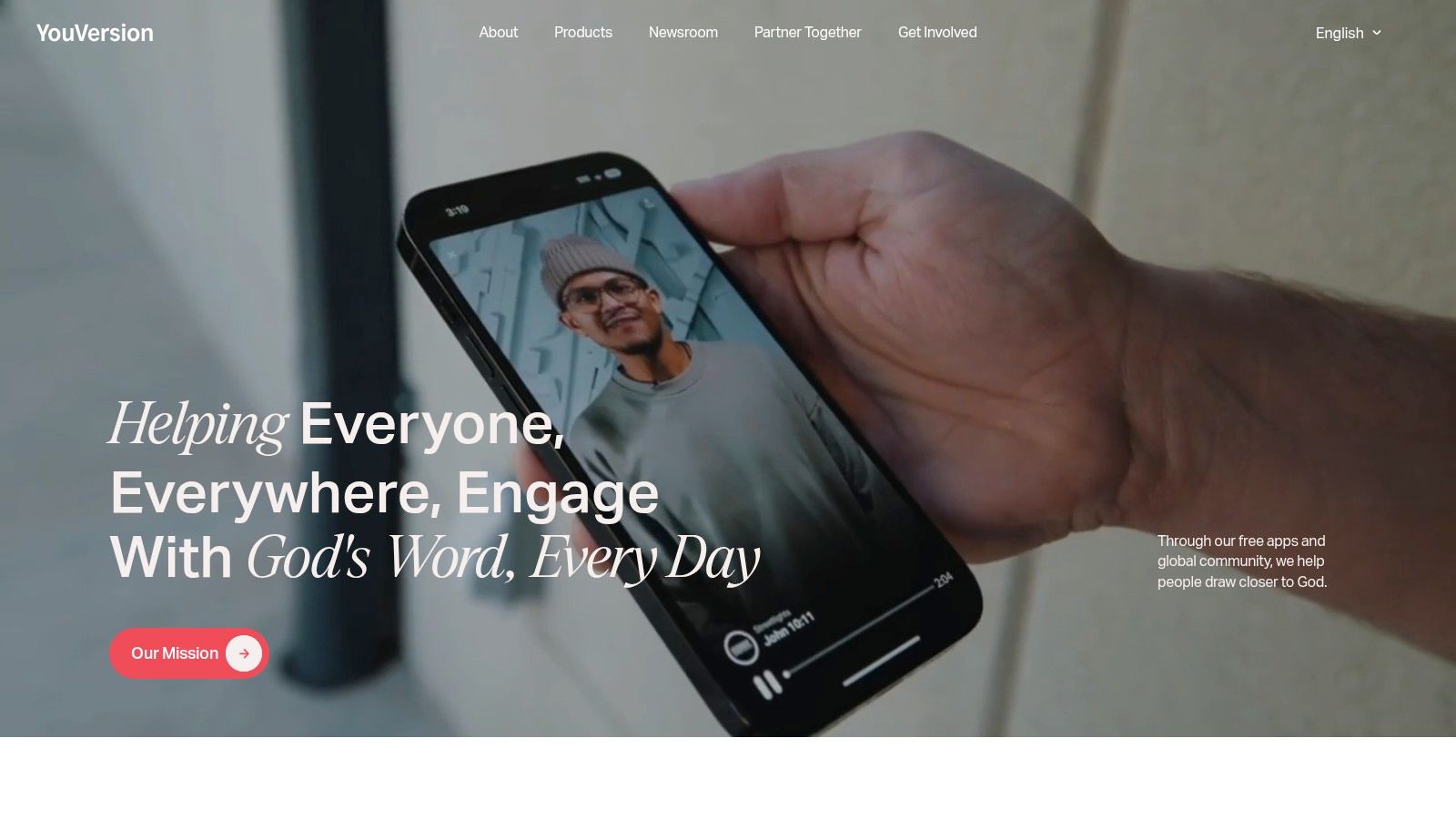
Reading plans are one of its strongest features. Reminders, streaks, video, and image content can make a daily routine easier to start, while highlights, notes, verse images, and group plans support different ways of engaging with a passage.
Best fit: Readers who want one free app for Bible access, simple study notes, plans, and reading with friends.
The trade-off is depth. YouVersion is convenient for regular reading, but its footnotes and original-language tools depend on external content rather than a dedicated research environment. Friends, comments, and shared plans can also pull attention away from the text if you prefer quiet, focused reading.
Choose it if broad Bible access and habit support matter more than specialist study tools. If a plan leaves you with questions about a word or historical context, pair it with a reference app rather than expecting YouVersion to function like a scholarly library.
2. Scroll With God
Scroll With God is built for a reader who wants to replace unfocused phone scrolling with a short, Scripture-centered routine. Its feed presents one verse at a time, pairs each passage with a prayer, and lets you continue into the full chapter without losing context. It's available on iOS and Android, with an ad-free free tier and the complete 66-book Bible in NIV, ESV, and KJV.
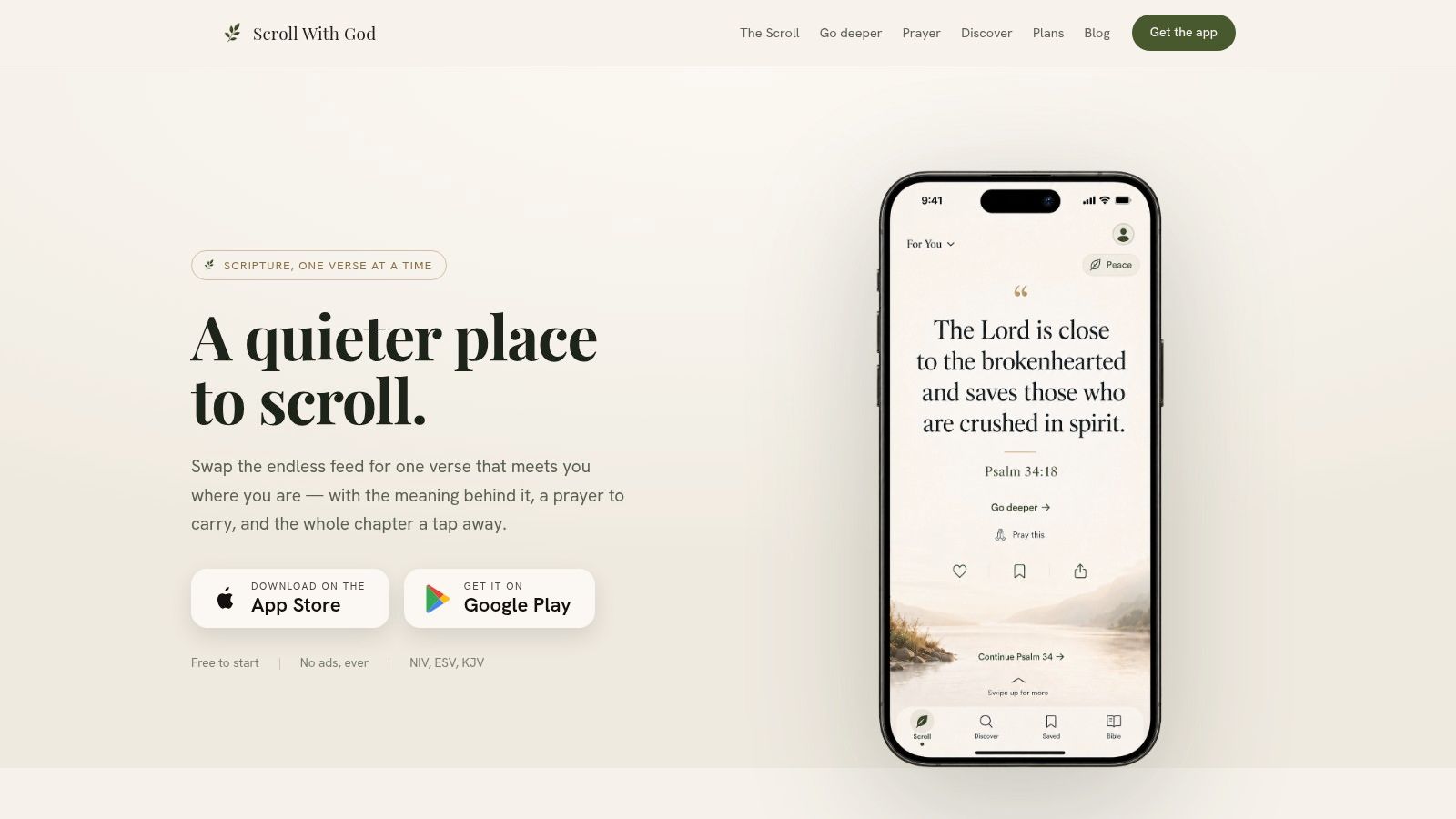
Readers can tune the feed around topics such as peace, grief, or gratitude, or use short collections for a manageable starting point. The free experience includes reminders, saves, likes, and notes. That combination is useful for someone who wants a small daily entry point, but the single-verse format isn't a substitute for sitting down with a full passage. The option to open the chapter matters because context can change how a verse reads.
What the Deeper subscription adds
The optional Deeper subscription adds study sheets with plain-language explanations, historical context, Hebrew or Greek notes, theological significance, cross references, and practical application. The app's study content cites sources including the NIV, BibleProject, and GotQuestions.org. The site lists Deeper at $4.99 per month or $50 per year, with a promotional $25 annual price shown and a 7-day trial for annual billing.
The limitation is clear: readers who want translations beyond NIV, ESV, and KJV will need another app, and full study sheets, curated plans, and unlimited notes and highlights require a paid subscription. For someone who values a calmer feed and a direct link from verse to prayer, that trade-off may make sense. You can also explore the app's Bible study and prayer articles for more on building a Scripture habit.
3. Bible Gateway
Bible Gateway works well for readers who want a familiar place to read multiple translations and listen to audio Bibles, with reference material available as an add-on. You can use the Bible Gateway app and website to read across platforms, then add Bible Gateway Plus for commentaries, study Bibles, and other resources. Plus also removes ads and provides cross-platform access.
The strength is approachability. Readers who already know which translation or reference they want can move between the text and supporting material without learning a professional research system. Its reference resources are also a natural next step when a passage needs more explanation than a reading plan provides.
Practical rule: Pick Bible Gateway when accessible reference materials matter more than advanced research workflows.
The main drawback is that much of the premium study content sits behind Plus. The mobile study tools are simpler than those in professional study apps, so serious word studies or complex teaching preparation may call for a more specialized platform. The subscription is described as a comparatively low monthly option, but the provided information doesn't specify a price.
Bible Gateway is best for readers who want Bible reading and familiar study add-ons in one accessible service. It's less suited to someone who needs a deep, highly customizable research workspace or wants all study resources available without a subscription.
4. Blue Letter Bible
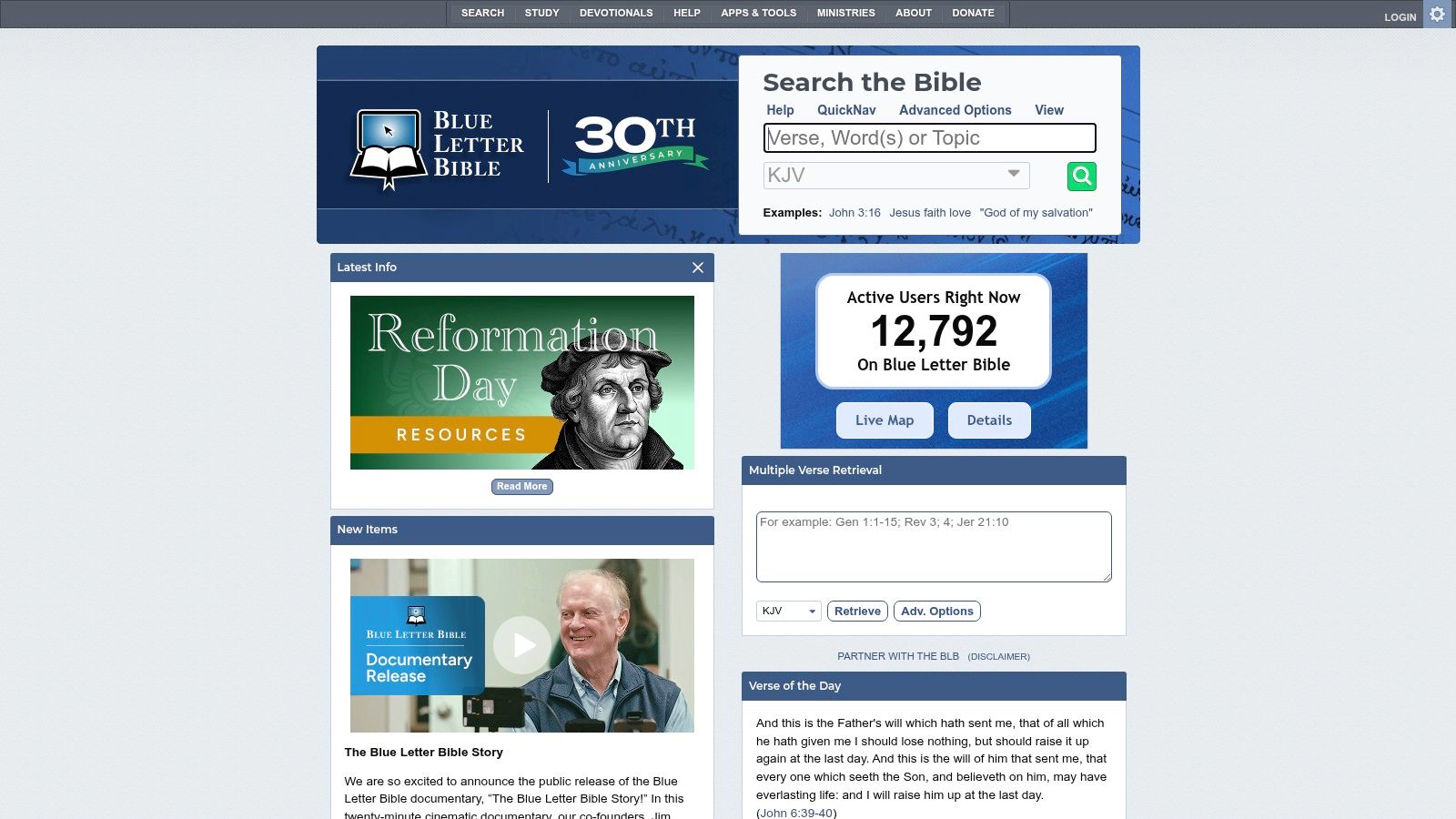
Blue Letter Bible is a strong choice when the question behind a passage is linguistic: What does this Hebrew or Greek term mean, and how does it compare with the translation? Its free, donation-supported Bible study app and website includes interlinear tools, lexicons, concordances, translation comparisons, and verse-linked dictionaries and commentary links.
The app can help readers move from a verse to word-level tools without paying for a resource library. Parallel translations are useful when you want to compare how different editions render a passage, while notes and reading plans support ordinary devotional use alongside study.
A focused tool, not a polished reading feed
The trade-off is usability. The interface can feel older and less polished than commercial apps, and some advanced mobile tools need an internet connection. That makes it a more natural fit for deliberate study sessions than for a reader who wants a minimal, distraction-free daily feed.
Blue Letter Bible also rewards curiosity. Its language resources can make a passage easier to investigate, but the presence of a lexicon or concordance doesn't remove the need to read in context. Use the tools to ask better questions, then return to the surrounding passage and compare translations rather than treating a word entry as a complete interpretation.
For readers interested in Hebrew and Greek at no cost, the depth is compelling. For people who value a modern interface or reliable offline access to every advanced feature, another app may be a better everyday companion.
5. Olive Tree Bible App
Olive Tree balances a readable Bible app with a resource library that can grow as your study needs change. Its Bible app includes a Resource Guide that connects passages with commentaries, maps, and articles. Readers can also use notes, highlights, bookmarks, Strong's Bibles, interlinears, and parsed Greek and Hebrew support.
A key advantage is the split-screen layout. You can keep a passage visible while consulting another resource, which makes comparison and note-taking easier than constantly jumping between separate screens. The app also supports offline use across iOS, Android, Mac, and Windows, and purchased books can be used across devices.
Build the library you need
That flexibility comes with a cost. Basic reading may be straightforward, but advanced original-language tools require paid resources. As the library grows, so can the total cost, so it's worth deciding which commentaries or language tools you'll use before buying more.
Olive Tree suits readers who want a blend of usability and study depth, especially if offline access matters. It's less appealing if you want every advanced feature included at no additional cost or prefer a single subscription with a clear, fixed library. Think of it as a customizable study shelf: useful when you know what references help you, potentially expensive when you keep adding books without a defined purpose.
6. Logos Bible Study
Logos is built for deep research, teaching, and exegesis. Its free basic app can be expanded with individual books or subscription libraries, and its Bible study platform works across desktop, web, and mobile. Tools such as Factbook, word studies, and the Insights Sidebar support a research workflow that goes well beyond reading and highlighting.
For pastors, teachers, and serious students, the advantage is the depth of the digital library and the ability to work across devices. Subscription libraries are described as containing 250–600+ books with ongoing updates. Readers can also buy books individually instead of committing to a subscription, although those options make it important to understand what's included before spending.
Serious study tools are most useful when you have a real research question to answer.
The learning curve is the obvious limitation. New users may find the interface and range of features demanding, especially if they only want a reading plan or a short devotional routine. Pricing can also be complex because the platform offers a free app, à-la-carte books, and subscriptions rather than one simple paid tier.
Choose Logos when research capability is the point, not just a possible bonus. For everyday reading, it may feel like more software than you need. For preparing to teach or following a passage across multiple resources, its specialized tools are the reason to accept that complexity.
7. Dwell: Audio Bible
Dwell is for people who prefer to listen to Scripture rather than spend another session reading on a screen. Its audio Bible app offers multiple narrators, music styles, playlists, and plans, along with tools for looping a verse, chapter, or book. A sleep timer and offline downloads make it practical for listening at home or while away from a reliable connection.
The curated audio experience is the main feature, not a side option. Dwell Mode, family or church plans, and repeat controls support listening as a regular practice, whether you're replaying one verse for memorization or listening to a longer passage. That focus can make it easier to keep Scripture in your day when reading isn't convenient.
Listening has different limits than reading
Dwell isn't a reference tool. It doesn't offer the extensive commentary and language resources found in study-focused apps, so listeners who want to look up the meaning of a word will need a separate Bible app. Translation availability also varies by license.
Audio can support reflection, but it may feel passive if you want to annotate, compare translations, or work through a passage closely. Dwell is best as an audio habit or complement to a text-based study app, not as a complete research environment. If listening is how you're most likely to return to Scripture, its specialization is a strength rather than a missing feature.
8. Hallow
Hallow is a guided prayer and meditation app with a Catholic emphasis. Its prayer and meditation library includes sessions and series such as the Rosary, Divine Mercy, and Examen, alongside Bible in a Year and Catechism in a Year content. Daily Gospel, sleep prayers, prayer reminders, and premium music radio add options for different parts of a devotional routine.
The free tier includes hundreds of sessions, while the full library and premium features require a subscription. That gives new users a way to try guided audio before paying, although the range of paid material is central to the full experience. Seasonal challenges and structured series can be useful when you'd rather be led through a prayer session than plan one yourself.
Best fit: Readers who want guided audio and prayer rooted in a Catholic tradition.
The tradition-specific focus is also the main limitation. Hallow's prayers and programs may not suit readers from other Christian traditions, particularly if they want a more general-purpose prayer format. It's also not a replacement for a full Bible reader or an in-depth reference library.
Choose Hallow when guided prayer is the main job, and its Catholic orientation fits your practice. If you mainly want to compare translations, take detailed study notes, or research a passage, pair it with a dedicated Bible app instead of expecting a meditation library to cover those needs.
9. Glorify: Devotional & Prayer
Glorify is designed around a guided quiet-time routine: Scripture, devotional reflection, prayer, and worship. The Glorify app also includes Daily Walk, meditation, prayer journaling, community features, reminders, and sleep content. It suits readers who want an organized devotional session rather than a blank page and an open-ended Bible passage.
The appeal is structure. A daily sequence can reduce the effort of deciding what to read, reflect on, and pray about, while the combination of worship and sleep content gives the app more than one use during the day. Journaling can also help users keep personal reflections and prayer notes together.
Guided devotion over reference study
Glorify's focus is devotional, not scholarly. It isn't the right tool for detailed word studies, extensive commentary work, or comparing a passage across a library of reference materials. Readers who want to investigate the context of a verse should plan to use a separate Bible study app.
Subscription prices vary by app store and region, so check the current offer shown for your account before subscribing. That variability makes it harder to compare cost without checking locally. Glorify is a reasonable fit when you value a guided routine and integrated worship or sleep content; it's less useful if you'd rather control the sequence yourself or need a serious study workspace.
10. Echo Prayer
Echo Prayer is a prayer tracker designed to sit alongside a Bible app, not replace one. With the Echo Prayer app, users can organize prayer requests, set reminders, record answered prayers, and share prayer feeds with groups. Personal lists make it easier to return to specific requests, while groups can support families, churches, or teams.
The separation from Bible reading can be a benefit. If you already have a Bible app you like, Echo gives prayer requests a dedicated place instead of forcing you to manage them in general notes. Answered-prayer tracking can also help you revisit requests over time, and reminders can bring a saved intention back into your routine.
The important limitation is that Echo doesn't include a Bible reader. You'll need another app for Scripture, and some group and advanced features require Echo Plus+. The app also offers prayer statistics and streaks, which may motivate some users but feel distracting to others. Consider whether tracking supports your practice or makes prayer feel like a performance. Echo works best when you want an organized prayer log and are comfortable keeping Bible reading in a separate tool.
Top 10 Bible Study & Prayer Apps Compared
| App | Core experience | Standout feature | Best for | Value / price |
|---|---|---|---|---|
| YouVersion (The Bible App) | Bible reading, audio, plans, and community | ✨ 2,800+ versions and group plans | 👥 Readers seeking a versatile, social Bible app | 💰 Free and ad-free |
| 🏆 Scroll With God | Focused one-verse feed with prayer and chapter context | ✨ Topic-tuned reading and plain-language study sheets | 👥 Readers seeking calmer scrolling, prayer, and accessible study | 💰 Free tier; Deeper $4.99/month or $50/year, with a 7-day annual trial |
| Bible Gateway | Bible reading, audio, and reference resources | ✨ Broad translation selection; Plus adds study materials | 👥 Readers who want familiar Bible references | 💰 Free; premium study tools require Plus |
| Blue Letter Bible | Bible reading with in-depth study tools | ✨ Hebrew and Greek tools, lexicons, and concordances | 👥 Readers interested in original-language study | 💰 Free; donation-supported |
| Olive Tree Bible App | Bible reading with expandable study resources | ✨ Offline access and a split-screen Resource Guide | 👥 Readers wanting flexible study across devices | 💰 Free app; resources may cost extra |
| Logos Bible Study | Research-focused Bible study platform | ✨ Factbook, word studies, and large digital libraries | 👥 Students, teachers, and serious researchers | 💰 Free basic app; books and subscriptions vary |
| Dwell: Audio Bible | Audio Scripture, meditation, and memorization | ✨ Narrators, playlists, looping, and offline listening | 👥 Listeners seeking Scripture immersion | 💰 Subscription options; pricing varies |
| Hallow | Guided prayer, meditation, and Catholic programs | ✨ Rosary, daily Bible programs, and seasonal series | 👥 Users seeking Catholic-focused guided prayer | 💰 Free tier; full library requires subscription |
| Glorify: Devotional & Prayer | Short devotional routine with prayer and worship | ✨ Journaling, music, and sleep content | 👥 Users building a guided quiet-time habit | 💰 Subscription pricing varies |
| Echo Prayer | Prayer lists, reminders, and group sharing | ✨ Answered-prayer tracking and community feeds | 👥 Individuals, families, churches, and teams | 💰 Free core features; some tools require Echo Plus+ |
Match the App to Your Daily Practice
Start with the job, not the app-store ranking. For a general daily reader who wants plans, audio, notes, and group reading, YouVersion is a flexible starting point. Scroll With God is a more focused option for someone who wants a verse-linked prayer and a short path into the full chapter. Blue Letter Bible, Olive Tree, and Logos serve increasingly specialized reference and research needs, while Dwell is built for listening.
Prayer routines call for a different comparison. Hallow provides guided sessions within a Catholic tradition; Glorify combines devotional structure with prayer, worship, and sleep content; Echo organizes requests and group prayer without providing Scripture itself. These apps aren't interchangeable. Pick the one that fits the part of your practice you currently struggle to sustain.
Try one free option for two weeks and pay attention to whether its reading format, reminders, and depth hold your attention. The point isn't to log in every day for the sake of a streak. Notice whether the app helps you return to Scripture or prayer in a way that feels useful, and whether its social features or tracking tools support that intention.
Don't pay for features you haven't needed. Add a subscription when a specific limit becomes a real barrier, such as missing study sheets, a needed translation, or a resource you'll use in teaching. If one app handles reading and another handles prayer, that can be a better fit than trying to make a single tool do everything.
Privacy and autonomy deserve a place in the decision too. Reminders, streaks, and prayer statistics can support consistency, but they can also make devotion feel measured. Prefer tools that let you control reminders and sharing, and choose a private approach if tracking makes your practice feel like performance. For group prayer, consider how requests are shared and whether the group offers clear boundaries around sensitive information.
Access matters just as much as features. Check whether the text and audio work offline if your connection is unreliable, and whether the presentation is comfortable for your eyes and reading needs. The best app is the one you can use consistently without fighting its interface or its assumptions about how you should pray. Keep your setup simple, and add another app only when it solves a distinct problem.
Scroll With God offers a focused Scripture feed, a prayer connected to every verse, and a path into the full chapter, with optional study sheets for readers who want more context. If you're looking for a calmer way to make Bible reading and prayer part of your day, visit Scroll With God to explore the free experience.