
8 Best Ways to Build a Daily Prayer Habit
Discover the best ways to build daily prayer habit with practical routines, Scripture rhythms, gentle tracking, and a sustainable plan.
In this article
- 1. Anchor Prayer to an Existing Daily Routine
- Pick a cue that survives a busy day
- 2. Start With a Tiny, Minimum-Viable Prayer
- Let depth grow after consistency
- 3. Set a Reminder That Feels Like an Invitation
- Adjust the prompt when it stops helping
- 4. Replace One Scroll With a Scripture Moment
- Make the end of the prayer clear
- 5. Pair Scripture With a Simple Prayer Structure
- Let evening reflection stay gentle
- 6. Let Your Current Season Shape Your Prayer Focus
- Follow the need, not only the mood
- 7. Follow a Short Guided Plan
- Keep the plan useful, not compulsory
- 8. Track Consistency Gently and Return After a Missed Day
- Use records to notice, not compare
- 8 Best Daily Prayer Habit Strategies Compared
- Build a Rhythm You Can Return To
Many people want a deeper prayer life, but the day fills up before they've decided what to read or what to say. They may start with a long morning routine, miss a day when life gets busy, then feel they've failed before the habit has had a chance to take root. A lasting practice doesn't depend on perfect focus or an ideal schedule. It starts with a small action you can repeat.
The best ways to build a daily prayer habit aren't about proving spiritual maturity or praying for a prescribed length of time. They connect prayer to a reliable part of your day, give you Scripture to respond to, and leave room for honest emotions. A 2024 review of 20 studies involving 2,601 people found that habit strength improved after interventions, while the reported time to form a habit varied widely. The findings support repetition and patience, not a deadline for feeling automatic (systematic review and meta-analysis of habit formation).
Treat the approaches below as a menu. Start with the one that solves your biggest obstacle, keep the first version manageable for two to three weeks, and add another layer only when it fits your actual life.
1. Anchor Prayer to an Existing Daily Routine
A new prayer habit is easier to remember when it follows something you already do. Choose a daily cue, such as pouring coffee, brushing your teeth, sitting down at your desk, or plugging in your phone at night. Then connect prayer to that moment instead of creating a separate appointment you have to remember.
Write the plan as a simple sentence: “After I pour my morning coffee, I'll open Scroll With God, read today's verse, and pray.” That format names both the cue and the action. You might instead pray after you start your commute, or read an evening verse after you plug in your phone.
Pick a cue that survives a busy day
The best anchor is one that happens consistently. A routine tied to an occasional event, like a weekly grocery trip, won't support a daily rhythm. If your mornings vary, choose a more dependable cue, perhaps lunch or bedtime.
Keep the first session short. A verse and a brief prayer can fit while the coffee brews, and the small commitment makes it easier to start on rushed days. Set a reminder near the anchor, not at a random time that interrupts something else.
Practical rule: Choose a cue you already meet, then let the prayer follow it. Don't make remembering the prayer a separate task.
Write your sentence somewhere visible while the routine is new. If your workday shifts, change the cue rather than treating the change as a failure. The point is to make prayer part of your real schedule, not to protect an ideal morning at all costs.

2. Start With a Tiny, Minimum-Viable Prayer
When the routine feels too demanding, shrink the prayer rather than dropping it. Set a clear minimum, such as one verse, one prayer, Amen. Read a passage, say a sentence in response, and finish. On a full day, that may be all you have room for, and it still counts as returning to prayer.
A tiny starting point doesn't dictate how deep your prayer can become. It removes the pressure to produce a long, eloquent session before you can begin. You might read the day's verse and use its written prayer, then add your own words when something specific comes to mind.
Let depth grow after consistency
Keep the minimum steady, even when you have more time. On a quieter morning, you can continue into the full chapter or sit with the passage longer, but don't turn the longer version into a new requirement. That distinction helps preserve the habit when your schedule tightens again.
If you've missed several days, return with the smallest version instead of waiting for a perfect restart. Read one verse. Pray one sentence, perhaps “Help me face this day with patience.” Then say Amen and carry on.

Some people find it useful to build a longer routine later, while others keep a brief prayer as their regular practice. Neither approach needs to become a measure of spiritual worth. Let the minimum help you show up, then choose extra reflection because it serves you, not because you're trying to make the session look impressive.
3. Set a Reminder That Feels Like an Invitation
“Pray sometime today” is easy to forget. A reminder tied to a realistic moment gives you a clearer plan, especially when paired with a specific action: “If my lunch break begins, I'll reread the verse and pray for someone I care about.” Scroll With God offers morning, midday, and evening reminders with the day's verse or an active plan, so you can connect the prompt to your routine.
Start with one reminder, not a full schedule of alerts. A morning prompt may work if you have a settled start to the day. If your mornings are hectic, try lunch or bedtime instead. When the first cue feels natural, you can consider adding another.
Adjust the prompt when it stops helping
Notifications can lose their usefulness when they feel repetitive, arrive at the wrong moment, or make prayer feel like another task to complete. Recent research on religious lifestyle apps highlights the value of context and user choice, including the option to pause or change reminders rather than feel controlled by them (research on reminders in religious lifestyle applications).
If an alert irritates you, don't keep adding more. Move it to a natural break, choose a different time, or turn it off and use an existing cue, such as waking, eating, commuting, or getting ready for bed. A verse-linked prompt can help, but it should still feel like an invitation you're free to accept.
Keep the reminder that brings you back. Change the one that makes you avoid the practice.
Review your reminder timing when your work, caregiving, or travel routine changes. The right schedule is the one that fits your day now, not the one you chose during a different season.
4. Replace One Scroll With a Scripture Moment
You don't have to stop using your phone to interrupt mindless scrolling. Redirect one familiar check toward Scripture and prayer. For example, open the day's verse before opening social media in the morning, or use a train commute to read a passage and pray instead of switching between feeds.
Scroll With God's single-verse feed presents one passage per screen, with a written prayer attached. You can swipe to the next verse, then continue into the source chapter when you have time to read more context. Put the app on the first screen of your phone and move social apps away from the same spot, so the replacement is easy to see.
Make the end of the prayer clear
The aim isn't to turn every phone check into a devotional session. Choose one moment, complete the verse and prayer, then close the app. That small ending helps you distinguish a focused pause from another open-ended scroll.
If a verse raises questions, follow it into the full chapter rather than treating a single line as the whole passage. You can also share a verse with a small group as a discussion starter, but sharing isn't required for the practice to count.

If you're prone to opening other apps automatically, try making Scripture the first stop before checking social platforms. If you prefer not to use your phone for prayer, leave a Bible open where you'll see it, or keep a verse card near your desk. The useful part is the deliberate change of attention, not the device.
5. Pair Scripture With a Simple Prayer Structure
Sometimes the obstacle isn't time. It's not knowing what to say. A repeatable pattern can take away the blank-page feeling: read a verse, notice a phrase, respond in your own words, and close with Amen. Use a written prayer as a starting point, then add one personal sentence.
You can also use a familiar framework such as ACTS: Adoration, Confession, Thanksgiving, and Supplication. With Philippians 4:6, for example, you might praise God, name an anxiety, give thanks for specific support, and ask for peace. The structure gives you an order, but you don't need to force every part into every prayer.
Let evening reflection stay gentle
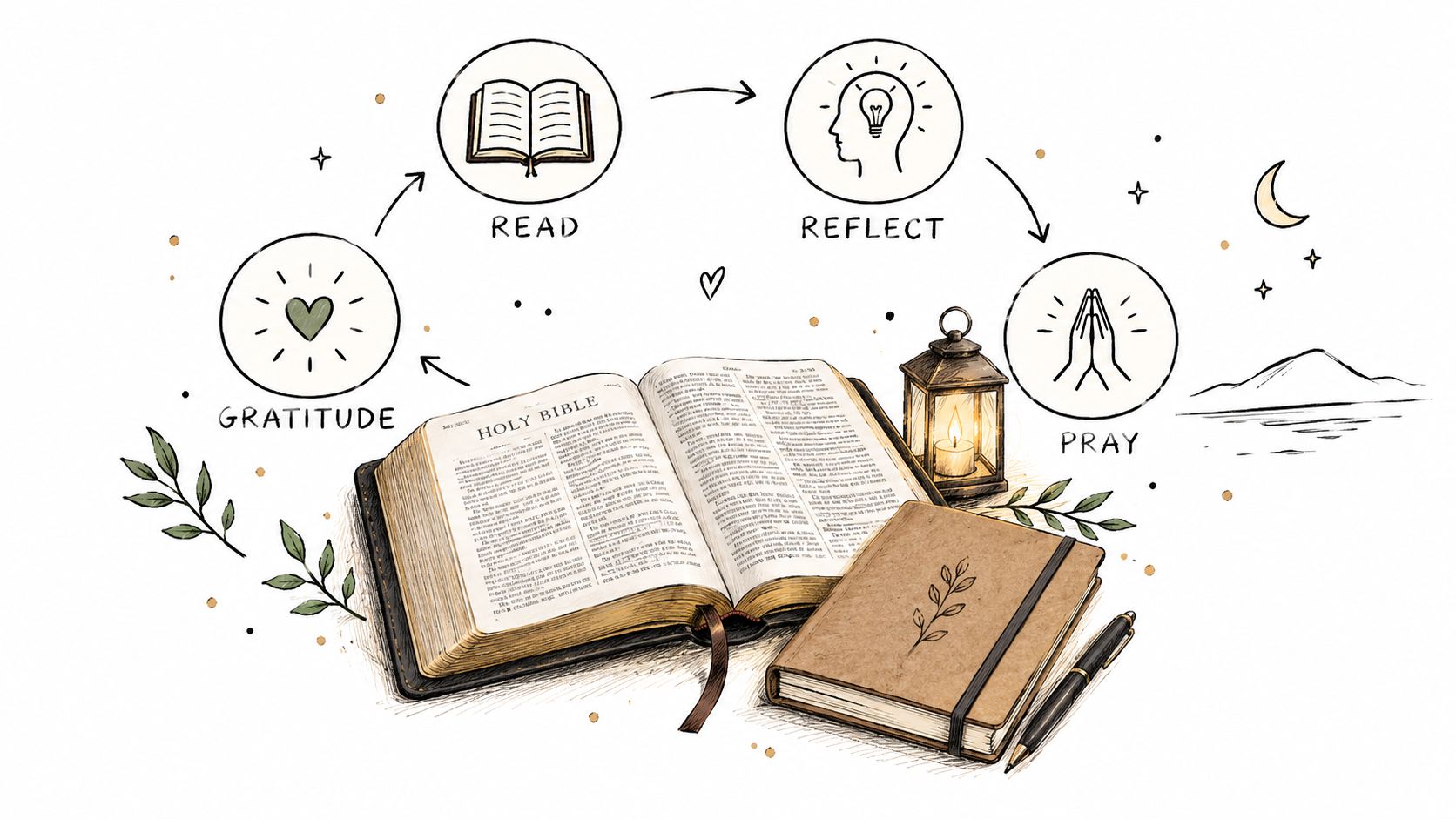
At night, reread the morning passage and name one moment of grace or gratitude from the day. If a fuller reflection suits you, an Examen can help you notice where you felt God's presence, where you need forgiveness, and what you're carrying into tomorrow. If you're tired, one sentence of thanks is enough.
A short, focused prayer may serve you better than a long session spent trying to concentrate. When prayer feels dry, disappointing, or hard to formulate, choose honesty over polished language. You can pray with gratitude, ask for help, sit in silence, lament, or say only what you can manage that day. A guide to apps for Bible study and prayer can also help you find a Scripture-centered format that suits the way you reflect.
6. Let Your Current Season Shape Your Prayer Focus
A prayer about grief may not sound like a prayer about gratitude, and that's appropriate. Name what's happening in your life, then choose Scripture and prayer that meet you there. If you're anxious about a decision, begin with a passage about peace or wisdom. If you're grieving, make room for lament as well as comfort.
Scroll With God lets you tune the feed by topic and explore Discover collections organized around themes such as peace, courage, hope, and grief. Following a theme can reduce the daily work of choosing what to read. You can stay with it for a few days, then change direction if your needs shift.
Follow the need, not only the mood
A relevant topic can help you begin, but don't use it to avoid every passage that challenges you. During a difficult season, a prayer of lament may be more truthful than forcing cheerful words. In a season of gratitude, you might name what you're thankful for and then pray for someone who is struggling.
Content about faith can support reflection, but it isn't a substitute for trusted pastoral care or professional help during serious distress. Share what you're facing with someone you trust when you need support beyond a reading routine. For more Scripture and devotional material, explore the Scroll With God team's author page.
Choose a theme that meets your circumstances, then leave room for a passage to surprise you.
You might name your season in a word at the start of the week, such as “transition,” “grief,” or “gratitude.” Revisit that word when it stops describing your experience. A flexible focus helps the routine stay personal without requiring you to design a new prayer from scratch every morning.
7. Follow a Short Guided Plan
A short plan can remove the daily decision of what to read. Choose a collection around courage, hope, peace, or another topic that matters to you, and follow one passage and prayer at a time. A plan with a clear ending can be especially helpful if open-ended Bible reading feels overwhelming.
You can follow a plan alone or share it with a small group. For instance, a group might read the same daily passage and share one insight in its chat each evening. A family might read the verse after dinner, then each person name one thing they want to pray about.
Keep the plan useful, not compulsory
Choose readings that fit your experience and the time you have. If a passage raises questions, continue into its chapter or discuss it with someone you trust. The plan is a structure for attention and prayer, not a scorecard that tells you how faithful you are.
Think about what comes next before the current collection ends. Pick another plan, return to a book of the Bible, or pause to reflect on what you've read. That small decision prevents the routine from ending because you ran out of material.
A guided plan should make it easier to return to Scripture, not harder to keep up.
If you're new to daily reading, choose a short thematic collection before committing to a longer reading program. If you already have a Bible-reading rhythm, a brief plan can add a prayer focus without replacing it. Keep the format that helps you attend to the passage and respond.
8. Track Consistency Gently and Return After a Missed Day
Tracking works best as feedback, not a spiritual scoreboard. A simple record can show whether mornings or evenings suit you better, or whether weekends disrupt your routine. Save a verse that mattered, jot down a brief note, or mark that you prayed without measuring the length or quality of the session.
If you miss a day, return the next day with the minimum version. Don't wait for Monday or a fresh month. Read one verse, pray one sentence, and continue with your life. The missed day is information about your routine, not proof that you can't build one.
Use records to notice, not compare
Scroll With God includes gentle day-count tracking and a library for saved verses, likes, notes, and highlights. Those features can help you revisit passages and notice recurring themes, but a streak should never become the measure of your relationship with God. Use tracking only if it encourages your return.
If weekends repeatedly interrupt the routine, change the anchor or reminder rather than demanding more discipline from yourself. You might shift prayer to breakfast instead of a workday commute, or use a shorter version when plans change. For more Scripture and prayer resources, visit the Scroll With God blog.
A trusted friend can offer gentle encouragement if you want accountability. Agree to check in without comparing prayer times or treating a missed day as a failure. The most useful measure is whether you can return to the practice with honesty and care.
8 Best Daily Prayer Habit Strategies Compared
| Prayer-Building Approach | 🔄 Implementation Complexity | ⚡ Resource Requirements | 📊 Expected Outcome | ⭐ Key Advantage | 💡 Ideal Use Case |
|---|---|---|---|---|---|
| Anchor Prayer to an Existing Daily Routine | Low; attach prayer to a stable daily cue | Existing routine; optional app reminder | A more regular prayer habit with less need to remember | Fits naturally into everyday life | People with a consistent routine, such as making coffee or commuting |
| Start With a Tiny, Minimum-Viable Prayer | Very low; begin with one verse and one sentence | 1–2 minutes | Consistency and momentum, with room to grow gradually | Reduces resistance on busy or low-energy days | Beginners or anyone restarting after a break |
| Set Fixed Reminders at Morning, Midday, and Evening | Low; choose times and pair them with specific actions | Phone notifications; one or more daily time slots | More structured prayer opportunities throughout the day | Adds external prompts and flexible touchpoints | People who forget or need reminders around daily breaks |
| Replace Scrolling With a Scripture Moment | Low; open the Scripture app before social media | Smartphone and a brief pause | Redirects an existing phone-checking habit toward Scripture | Uses an established behavior rather than removing it | People who often check their phones during idle moments |
| Pair Scripture With Structured Prayer and Evening Reflection | Moderate; follow a repeatable reading and prayer framework | A verse; optional written prayer or journal; extra time for reflection | More focused prayer and a link between Scripture and daily life | Provides guidance when it is hard to know what to say | Beginners or those seeking a morning-and-evening rhythm |
| Let Life Seasons Shape Your Prayer Focus | Low to moderate; choose and periodically review a relevant topic | Scripture or a themed collection; optional pastoral or professional support | Prayer that reflects current needs and emotions | Offers relevant language for different life circumstances | People navigating grief, anxiety, transition, or gratitude |
| Follow a Short Guided Plan of One Week or Less | Low; select a plan and decide what follows it | A short reading plan; optional group discussion | A clear, finite path with visible progress | Reduces daily decisions about what to read | Beginners, returning users, families, or small groups |
| Track Consistency Gently and Never Miss Twice | Low; record practice without treating it as a score | Simple tracker or app; optional notes or accountability | Greater awareness of patterns and an easier return after missed days | Makes progress visible without requiring perfection | People motivated by feedback who want to avoid streak pressure |
Build a Rhythm You Can Return To
Choose one practice today. Anchor prayer to a routine you already have, begin with one verse and a sentence, or set one reminder that lands at a natural break. Keep the first version small enough to use on an ordinary day, not only on a calm morning when nothing else is competing for your attention.
Follow that minimum for two to three weeks before adding another layer. You might add a short evening reflection, continue from a verse into its chapter, or choose a brief guided plan. If the routine starts to feel burdensome, simplify it instead of deciding that prayer itself has failed.
Review the practice as your life changes. A reminder that worked during a predictable work schedule may not suit shift work, caregiving, travel, illness, or a difficult emotional season. Move the cue, change the time, or pause notifications when you need to. A flexible routine is easier to return to than one that depends on everything going to plan.
Prayer doesn't need to become a performance of focus or fluency. Some days you'll have words; other days, a verse and a quiet moment may be all you can offer. If prayer feels dry, acknowledge that without demanding an immediate emotional payoff. If you're disappointed or distracted, begin with what's true and choose a form of prayer that fits: gratitude, lament, silence, intercession, or a brief request for help.
The point is not to keep an unbroken record or match someone else's devotional schedule. It's to build a practice that gives you a way to meet Scripture, respond with sincerity, and return after interruptions. Start where you are, keep the next step manageable, and adjust the routine to your actual life. Sustainable prayer grows through faithful return.
Scroll With God pairs a single Bible verse with context and a written prayer, and lets you continue into the full chapter when you're ready. Use its topic collections, reminders, and gentle day-count tracking to build a Scripture-centered routine at a pace that fits your life. Explore Scroll With God and choose one small prayer practice to begin today.