A Bible Verse to Encourage Someone: How to Choose and Share
Looking for a Bible verse to encourage someone? Discover how to pick the right passage, understand its meaning, and share it thoughtfully with care.

In this article
- Why the Verse You Choose Matters More Than the Verse You Send
- Match the passage to the moment
- What Makes a Bible Verse Encouraging
- Read the passage around the line
- Six Core Encouraging Verses and Their Distinct Emphases
- Six passages, six distinct emphases
- Choose a translation the recipient will understand
- Matching Verses to Specific Situations
- Grief
- Anxiety and exhaustion
- Loneliness
- How to Send a Bible Verse Without Sounding Preachy
- Make the note personal and low-pressure
- Choose a channel that fits
- When Not to Send a Bible Verse
- Use a quick decision check
- A Short Checklist for Next Time Someone You Care About Is Struggling
A friend texts that her father has died. A coworker mentions a frightening diagnosis as you're both leaving the office. Your sibling says they're burned out, then changes the subject. You want to help, so a Bible verse comes to mind. But the right words can comfort, while the wrong words at the wrong moment can sound like a demand to feel better.
Choosing a Bible verse to encourage someone is less about finding the most inspiring line and more about noticing what the person needs now. Do they need someone to acknowledge their pain, a reminder of God's presence, or an invitation to keep going? The verse matters, but so does the stage of the struggle, the recipient's faith, and the care you show before and after you send it.
Why the Verse You Choose Matters More Than the Verse You Send
When someone shares painful news, your first impulse may be to offer the verse that has helped you. That impulse comes from care. Still, your friend's need may be different from yours. A promise about future hope can feel cold to someone who has just lost a parent. A call to be courageous can sound like criticism to a person who is already trying hard to get through the day.
Encouragement isn't reassurance. It's a response that meets the person where they are. Sometimes that means sharing a passage. Sometimes it means asking what happened and staying quiet long enough to hear the answer.
Match the passage to the moment
Think about what the person's experience is asking of them. Someone in fresh grief may need acknowledgment and presence, not an explanation of why everything happens. Someone living with ongoing anxiety may welcome a passage that connects fear with prayer, as long as it doesn't imply that worry is a failure of faith. A tired person may need permission to rest more than another appeal to persevere.
A Bible verse can also carry a message you didn't intend. A line about strength may sound as if the recipient isn't allowed to feel weak. A promise of a hopeful future may feel like pressure to stop grieving. The passage hasn't changed, but its effect depends on timing, context, and the relationship between you.
Start with the person, not your favorite verse. Ask what they're facing before deciding what to send.
Researchers examining how African American adults used Scripture during stressful events found that participants turned to passages for different purposes, including protection, healing, prayer, remembrance, and hope about life after death. That qualitative study documents varied ways real readers made meaning from Scripture, not a single response that applies to everyone. Its findings support a practical point: a verse is most considerate when you understand what kind of help the recipient might welcome. (The study on Bible reading during stressful events)
Before you share a verse, pause and ask: Will this passage make room for what they feel, or will it ask them to move past it? That question is a better starting point than searching for the most uplifting line.
What Makes a Bible Verse Encouraging
A verse can encourage in different ways. Naming the difference helps you choose with care instead of sending the first passage you remember.
Comfort stays close to suffering. It doesn't rush to explain pain or insist that the person feel hopeful. Psalm 34:18, for example, speaks of God being near to the brokenhearted. For someone who is grieving, that emphasis on nearness may offer more care than advice.
Reassurance reminds someone of a claim about God's character or presence. Isaiah 41:10 offers reassurance through its language of God strengthening and helping. That may fit a person who feels afraid or alone, provided the verse doesn't arrive as a demand to stop feeling fear.
Challenge invites someone to respond, endure, or trust. Joshua 1:9 calls its audience to courage. That can be meaningful when a person is preparing to take a difficult step. It may land poorly when they're in shock or just need you to acknowledge how hard things are.
Read the passage around the line
A verse isn't a slogan floating free of the rest of the Bible. Read the surrounding chapter and consider who is speaking, who is being addressed, and what the passage is doing in context. A sentence that sounds like a personal guarantee when isolated may have a more specific role within its original setting.
This doesn't mean you need to deliver a lecture with every message. It means you should know enough not to make the passage promise something it doesn't say. If you can't explain, in plain language, why you chose the verse for this person, take more time before sending it.
Use this simple filter:
- Comfort: Does it acknowledge sorrow or suffering?
- Reassurance: Does it remind the recipient of care or presence?
- Challenge: Does it call for courage, patience, or action?
A helpful verse doesn't erase the person's feelings. It meets them without pretending the pain is smaller than it is.
Once you know which kind of encouragement the moment calls for, you can choose a passage more thoughtfully.
Six Core Encouraging Verses and Their Distinct Emphases
Send Philippians 4:6–7 to a friend in the first raw days of grief, and it can land as a rebuke. Send Psalm 34:18 to someone gearing up for a hard decision, and it may miss what they need. These passages are not interchangeable. Each one emphasizes something different, and the right choice depends on what the recipient is carrying.
Six passages, six distinct emphases
Isaiah 41:10 centers on God's presence and help. Send it when someone feels frightened or isolated. Skip it when it would read as a correction, as if fear itself proves weak faith. Follow it up by staying in contact.
Psalm 23 uses the image of a shepherd guiding and caring for a flock, including through a dark valley. Its comfort holds even when hardship shows no sign of lifting soon. It suits grief or uncertainty when you want to emphasize companionship through difficulty rather than a quick exit from it.
Psalm 34:18 speaks of God's closeness to the brokenhearted. Choose it when someone needs their pain named and acknowledged. It offers no explanation for why a loss happened, so do not attach one. Pair it with your own presence: a call, a meal, a second message a week later.
Philippians 4:6–7 connects anxiety with prayer and describes peace as guarding hearts and minds. Read it as an invitation to bring concerns to God, not as blame for having them. If the recipient has a complicated relationship with faith, ask before sending it.
2 Corinthians 1:3–4 describes God as a source of comfort in affliction and ties receiving comfort to comforting others. It can suit someone searching for a faith-centered way to think about hardship. Do not turn it into pressure to help others before they have had room to receive care themselves.
Joshua 1:9 calls its audience to courage and grounds that command in God's presence. It fits someone facing a daunting next step. It is a poor way to tell a grieving person to toughen up.
Choose a translation the recipient will understand
The NIV, ESV, and KJV differ in wording, tone, and cadence. Familiarity matters more than sounding formal or poetic. If you know the recipient reads the KJV, use that. If they prefer contemporary wording, pick a translation they already find clear instead of assuming one version suits everyone.
People engage with Scripture through prayer, praise, healing, and protection, not only through study. This overview of ways people use Bible study and prayer apps can help you think through how the recipient might encounter a passage. Whatever you choose, include the reference and enough surrounding context for them to keep reading if they want to.
Matching Verses to Specific Situations
Start with what the person is living through, not with a list of popular verses. The same passage can comfort one person and frustrate another, so treat these pairings as a guide rather than a script.
Grief
For fresh grief, Psalm 34:18 is often a gentler choice than a promise about a future outcome. It names brokenheartedness without explaining it away. Avoid sending “God has a plan” as a quick answer when the person is still in shock. Even if that idea matters to you, a grieving friend may hear it as a reason their loss should feel acceptable.
You might write: “I'm so sorry. I know there aren't words for this, but I'm thinking of you. Psalm 34:18 came to mind, and I'm here if you'd like to talk.”
Anxiety and exhaustion
For someone who wants faith-based support with ongoing anxiety, Philippians 4:6–7 connects prayer with peace. Its movement matters: it points toward bringing concerns to God rather than scolding someone for having them. If a person is worn down from doing too much, consider Matthew 11:28 as a passage about coming to Jesus while weary and burdened. Don't answer exhaustion with a verse that sounds like one more demand to work harder.
For more on choosing a courage-focused passage without making it a command to hide fear, see this guide to what the Bible says about courage.
Loneliness
Psalm 23 can offer language about companionship through a difficult stretch. But if the person feels lonely, don't assume a verse will substitute for contact. Ask whether they'd like a call, invite them for a walk, or make a plan to see them.
| Situation | Recommended verse | Use when | Avoid when |
|---|---|---|---|
| Acute grief | Psalm 34:18 | They may welcome a reminder of nearness | They need immediate practical help or don't want Scripture |
| Ongoing anxiety | Philippians 4:6–7 | They welcome prayer-centered encouragement | It could sound like anxiety is their fault |
| Exhaustion | Matthew 11:28 | They need permission to come as they are | They need concrete help more than another message |
| Loneliness | Psalm 23 | They value a reminder of companionship | You're using the verse instead of showing up |
How to Send a Bible Verse Without Sounding Preachy
A verse sent by itself can look like a slogan, especially right after someone has told you something painful. Add a short personal note explaining why you thought of them, and leave room for whatever they say back. You don't need to explain the whole passage or tell them how to feel about it.

Make the note personal and low-pressure
Try: "I was thinking about you and remembered this passage. No need to reply, but I'm here if you want company." That wording makes your care clear and leaves them in control.
Skip: "God told me to send you this." It makes your choice sound unquestionable and pressures them to receive it a certain way. Send the verse as an offer they can take or leave, with no obligation attached.
Match the translation to the one they already read, as covered above. If you're not sure which version they use, ask which wording feels familiar to them.
Choose a channel that fits
A text or voice note works when you want to check in quickly. A handwritten card carries more weight during grief, especially when you don't expect a fast reply. Whatever the channel, say something specific about their situation: "I know the last few days have been heavy," or "I'm sorry you're carrying so much at work."
If you share a digital passage, include the reference so they can read the surrounding chapter. Context makes a verse more meaningful than an image of a single line, so add one sentence about why it came to mind. A short prayer may be welcome, but don't assume it will be.
Then listen. If they reply with their story, resist the urge to send another passage. A second verse often answers a moment they already moved past; your attention is the follow-through that makes the first one land.
When Not to Send a Bible Verse
A Bible verse isn't always the kindest first response. In very recent grief, a person may need you to listen, sit beside them, or handle a practical task more than they need a passage. If someone has told you that verses feel like pressure, believe them. Don't make your desire to encourage them more important than their request.
Take care with friends who aren't Christian or don't actively practice a faith. A verse they didn't ask for may feel like an attempt to persuade them rather than a gesture of care. Ask first: “Would a Bible verse be comforting, or would you rather I just listen?” If they say no, respect the answer.
Christian grief advice often points to passages including Psalm 34:18 and 2 Corinthians 1:3–4, but selecting a comfort-oriented verse doesn't guarantee it will comfort a particular person. Guidance on Bible verses for difficult moments is a reminder to consider how a passage may land, not just what the reference is.
Use a quick decision check
Before sending anything, ask yourself:
- Have they welcomed Scripture? If you don't know, ask.
- Are they in immediate distress? Offer your presence and help first.
- Are they at risk or in crisis? Prioritize professional or emergency support rather than treating a verse as a substitute for care.
- Would an action help more? Offer a meal, a ride, a phone call, or a quiet visit.
If you're worried someone may hurt themselves or isn't safe, don't rely on a Bible verse to manage the situation. Stay with them if you can, contact someone they trust, and seek appropriate professional or emergency help. You can honor your faith without quoting Scripture: “I care about you, and I'll stay with you while we figure out what support you need.”
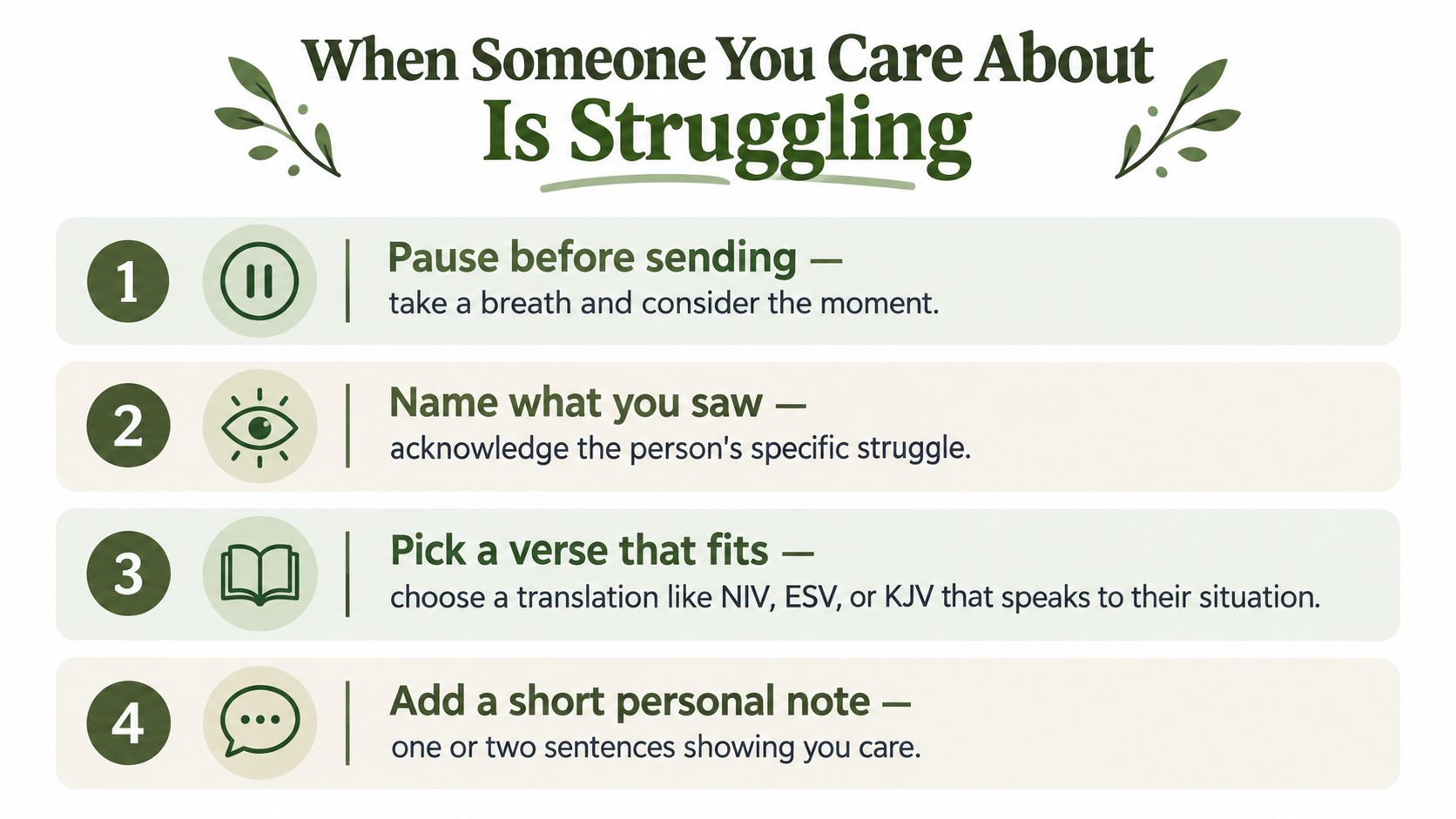
A Short Checklist for Next Time Someone You Care About Is Struggling
Keep this routine in mind when difficult news arrives:
- Pause before sending the first verse that comes to mind.
- Name what you noticed. Acknowledge the specific loss, fear, or exhaustion.
- Choose a fitting passage. Match it to the person's situation, faith, and translation preference.
- Add a personal note. Make clear that you're available without asking for an immediate reply.
- Follow up with presence. Listen, call, bring food, or help with a practical task.
- Skip the verse if the person doesn't want one or needs urgent support.
The point isn't to deliver the perfect passage. It's to help someone feel seen, and a verse is only one way to do that. Sometimes the most thoughtful encouragement is a meal, a call, or staying in the conversation.
Scroll With God offers a focused way to read Scripture, with a verse paired with context and prayer, plus a path into the full chapter. If you want help choosing and understanding passages for the season someone is facing, visit Scroll With God.