8 Bible Verses for New Beginnings: Hope and Renewal
Explore 8 Bible verses for new beginnings, with context, meaning, and a prayer for each passage to guide fresh starts, change, and renewal in faith.
In this article
- 1. 2 Corinthians 5:17
- New doesn't mean instantly finished
- 2. Lamentations 3:22-23
- Mercy without pretending
- 3. Isaiah 43:18-19
- Remember faithfully without becoming trapped
- 4. Psalm 51:10
- Ask for a heart that tells the truth
- 5. Philippians 3:13-14
- Leave behind what prevents faithful movement
- 6. Revelation 21:5
- More than a private escape
- 7. Ezekiel 36:26
- A new heart produces a different response
- 8. Romans 6:4
- Walk differently because you belong to Christ
- How the eight new-beginning passages compare
- Choose the Verse That Matches Your Next Season
- Begin with context, then respond
Have you ever wanted a fresh start but found that a motivational quote wasn't enough? Encouraging words can help, but they rarely tell you what needs to change, what to do next, or how to keep going when life still hurts.
Scripture speaks to that gap in more than one way. Bible verses for new beginnings describe several distinct kinds of renewal: a new identity in Christ, a mercy that arrives fresh each morning, an inner change of heart, a clear direction forward, a baptismal fresh start, and God's final renewal of all things. These are not interchangeable promises. Sorting each verse by the kind of change it describes keeps you from expecting something the passage never offered.
You also don't need a perfect reading habit to begin. Pew Research Center's reporting on American religious life found that 35% of Americans read scripture at least weekly, while 45% seldom or never read it. If you're returning after a long gap, one passage read carefully will teach you more than an ambitious schedule you abandon by Friday.
The eight passages ahead address different needs: forgiveness after failure, hope during grief, direction after disruption, and the slow work of becoming more faithful. Match the verse to the kind of beginning you face. Then read the surrounding passage, not just the encouraging line, because context is where a verse stops sounding like a slogan.
1. 2 Corinthians 5:17
Kind of new beginning: A new identity in Christ.
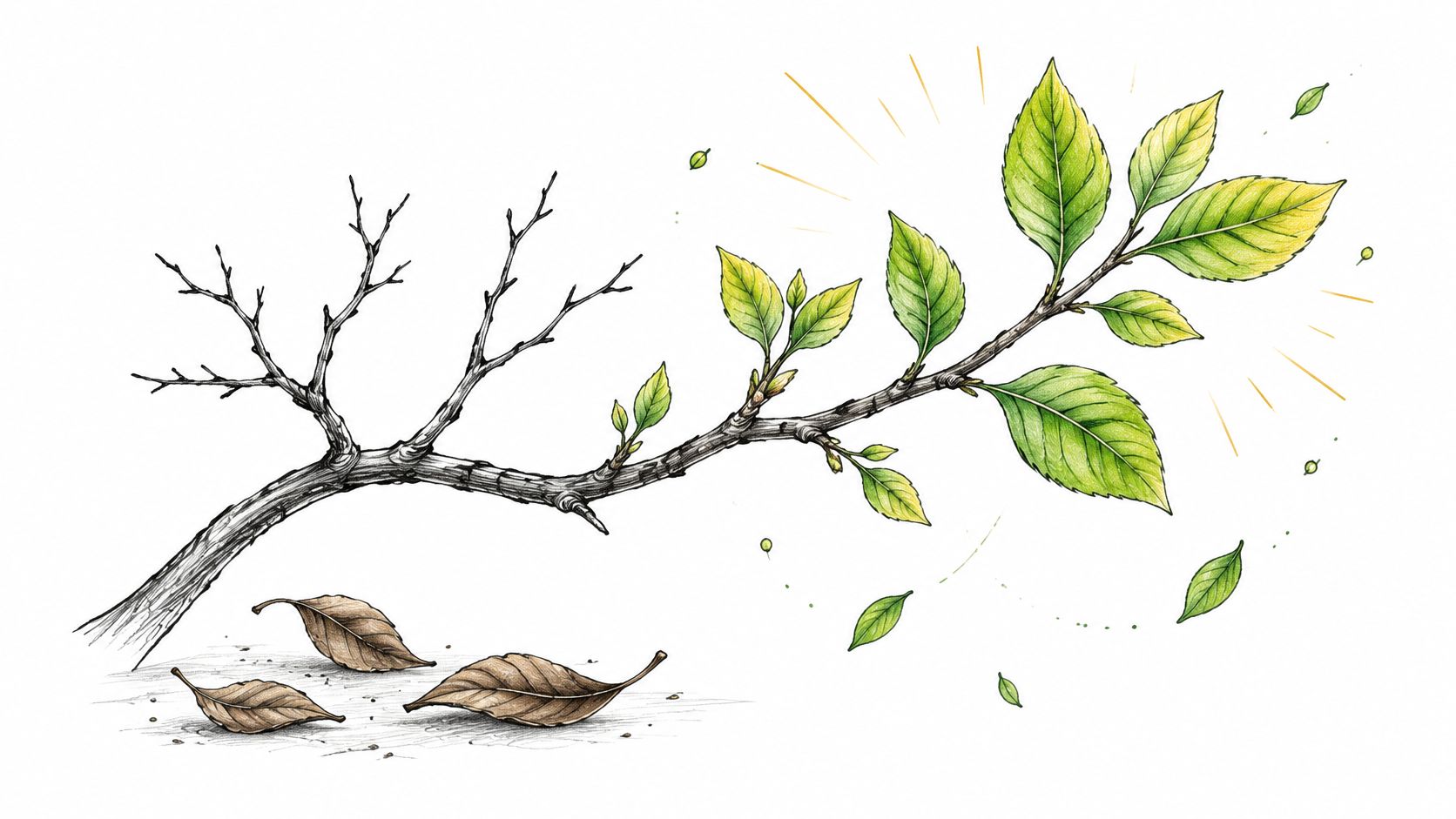
Paul describes the person who belongs to Christ as a new creation. The emphasis isn't on improved habits or more favorable circumstances. It's on a changed relationship with God that reshapes how a person understands themselves and others.
In the surrounding passage, Paul explains that Christ's love directs his life and that God reconciles people to himself through Christ. Read 2 Corinthians 5:11–21 together, and the connection becomes clearer: new creation belongs within God's work of reconciliation. It isn't a technique for reinventing yourself independently of him.
New doesn't mean instantly finished
The Greek adjective often transliterated kainos conveys newness, with an emphasis here on a transformed condition. Paul isn't saying that believers immediately lose every painful memory, temptation, or learned behavior. A new identity and ongoing growth belong together.
For someone beginning a recovery journey, this distinction matters. You can acknowledge the harm you've caused, accept responsibility, and seek help without treating your worst action as the whole truth about who you are.
Your past still matters, but it doesn't have to be the final definition of your life in Christ.
Use this passage when you're tempted to confuse repentance with permanent self-condemnation. Ask what reconciliation with God should change in a specific relationship or decision today.
A suitable prayer is simple: God, thank you for receiving me through Christ. Help me live from that belonging, including making amends where I can.
2. Lamentations 3:22-23
Kind of new beginning: Daily mercy in the middle of grief.

Some mornings, beginning again means getting out of bed while carrying the same sorrow. Lamentations speaks into that experience without demanding that you feel cheerful.
The book mourns Jerusalem's destruction. Within that setting of devastation, the speaker recalls God's compassion and faithfulness. The surrounding chapter contains bitter suffering as well as hope, so these verses shouldn't be separated from the grief that gives them their force.
Mercy without pretending
The Hebrew language behind this passage includes God's steadfast love and tender compassion. Translations differ slightly in how they express the opening statement, but the central assurance remains: God's compassion isn't exhausted by yesterday's suffering.
Mercy being new each morning doesn't mean that every morning brings good news. It means the grieving person can turn toward God again without first resolving the grief.
- When you wake: Name what hurts before asking for strength.
- Before a difficult task: Ask for enough grace to face that task, rather than certainty about the whole future.
- When sorrow returns: Read the surrounding lament instead of treating sadness as a failure of faith.
If you're grieving a death, this passage may fit better than a verse about pressing toward a goal. You don't have to turn loss into an achievement.
Understanding what hope means in the Bible can help you distinguish trust in God from optimism about immediate circumstances. Pray for today's mercy, and let tomorrow remain tomorrow.
3. Isaiah 43:18-19
Kind of new beginning: A way forward after displacement and loss.
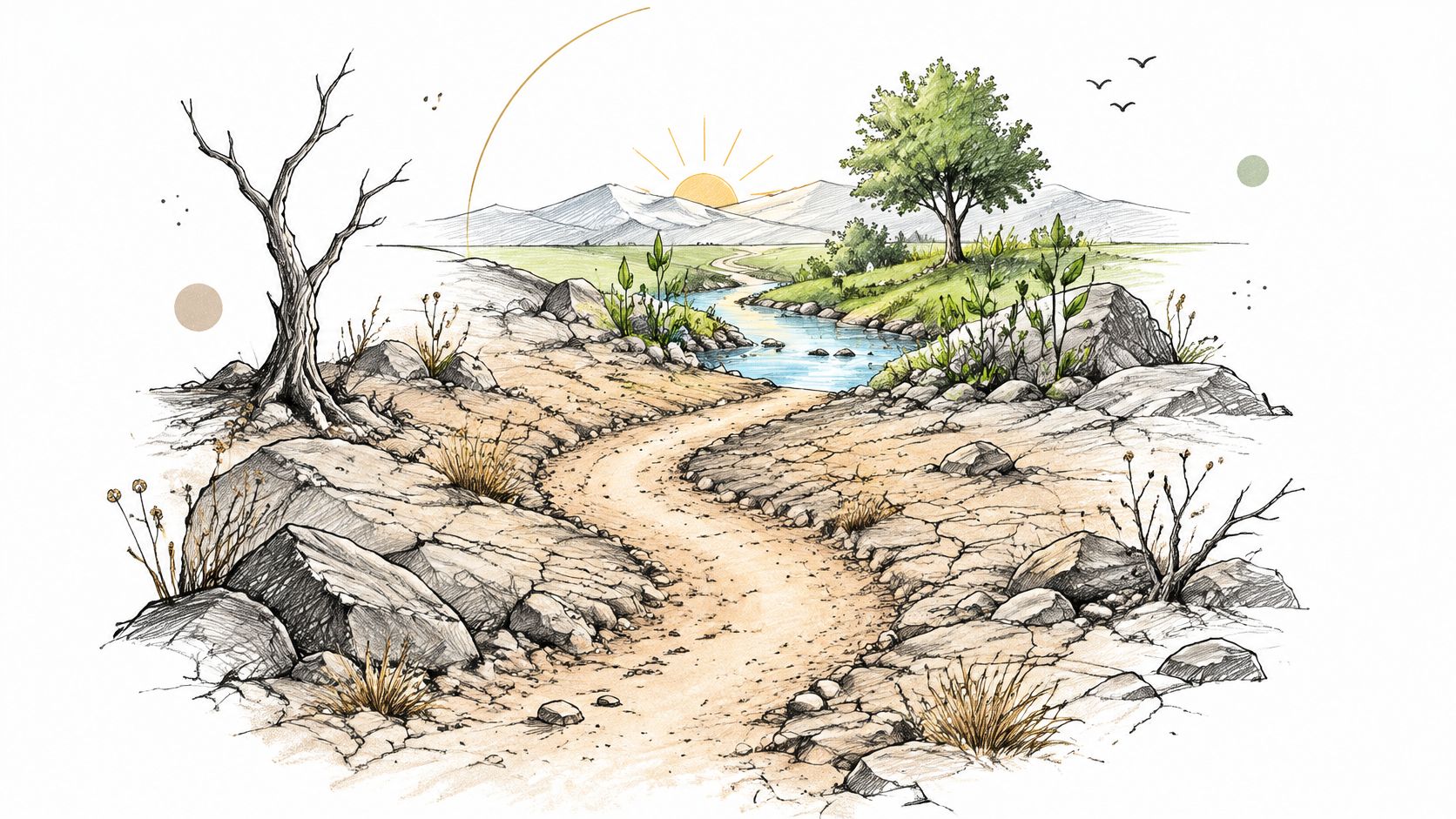
God's promise of a new thing wasn't originally addressed to someone deciding whether to change jobs. Isaiah speaks to Israel in the setting of exile, where people needed assurance that displacement and judgment hadn't ended God's purposes for them.
Read Isaiah 43:14–21 and notice the movement. God recalls his power over the sea, evoking the exodus, then describes a way through the wilderness and water in a dry land. The promised renewal is another act of deliverance, not a more positive outlook.
Remember faithfully without becoming trapped
The instruction not to dwell on former things doesn't mean history is worthless. The passage itself remembers God's earlier saving work. Instead, Israel must remain open to God acting beyond the pattern they already know.
The new thing is God's work, not whatever opportunity happens to excite us. That distinction protects the verse from becoming a blanket endorsement of every move, relationship, or business idea.
Say you're rebuilding after an unwanted relocation. You can apply this passage by remembering God's faithfulness while remaining open to unfamiliar ways of receiving help. You can't use it to guarantee that the next home or job will be easy.
Application boundary: Trust God with an unfamiliar future, but don't treat this promise to Israel as a prediction of your preferred outcome.
Write down a past experience that still controls your expectations. Then name a faithful action available now, such as joining a local church or asking someone for practical help.
Reflecting on what the Bible says about courage can help you take that step without pretending you know the result.
4. Psalm 51:10
Kind of new beginning: Repentance and inner cleansing.

A changed address won't repair dishonesty. A new relationship won't automatically remove resentment. Sometimes the beginning we need is inward, and Psalm 51 gives us language for asking God to work there.
The psalm's heading connects David's prayer with Nathan confronting him after his sin involving Bathsheba. The prayer acknowledges wrongdoing rather than explaining it away. When David asks for a clean heart and a steadfast spirit, he seeks more than relief from consequences.
Ask for a heart that tells the truth
The Hebrew verb bara, translated as create, is also used for God's creative activity elsewhere in Scripture. Here, the prayer places deep renewal in God's hands. The heart refers to the inner person, including thought, desire, and will, not emotion alone.
A steadfast spirit is a firm, enduring disposition. David needs both cleansing from sin and stability for faithful living.
For example, if you've damaged trust through repeated lying, this verse can guide confession. But praying it doesn't replace telling the truth, accepting boundaries, or allowing the other person time to heal.
- Name the wrong: Describe what you did without shifting blame.
- Ask for inward change: Bring the desire beneath the behavior to God.
- Take responsibility: Choose a concrete act of honesty or repair.
Reading about a Bible verse on forgiveness can help you consider how receiving mercy relates to forgiving others. Neither forgiveness nor repentance requires pretending that harm didn't happen.
Pray this psalm when you need more than a clean slate. Ask God for a changed willingness to live truthfully.
5. Philippians 3:13-14
Kind of new beginning: A forward direction in ongoing discipleship.
Paul doesn't write as someone who considers his spiritual growth complete. Immediately before these verses, he acknowledges that he hasn't already reached the goal. His determination rests alongside humility, not confidence in his own perfection.
Earlier in Philippians 3, Paul discusses the credentials he once valued and the surpassing importance of knowing Christ. His forward movement therefore concerns knowing Christ and sharing in his resurrection life, not achieving any personal ambition he chooses.
The athletic picture helps explain his language. A runner reaches toward the finish rather than continually turning backward. Paul's attention is directed toward God's call in Christ.
Leave behind what prevents faithful movement
Forgetting what lies behind doesn't require literal memory loss. It doesn't cancel restitution, erase trauma, or make reflection unnecessary. It means the past must not become the controlling object of Paul's pursuit.
Both failure and success can hold someone in place. You might believe a past mistake disqualifies you from serving, or assume that past faithfulness means you no longer need to grow.
Pressing forward means responding faithfully to Christ now, not proving that you've already arrived.
Suppose you started a Scripture habit and stopped. This passage offers a better response than either self-criticism or a dramatic promise never to miss again: acknowledge the interruption and return.
Choose a small practice that supports the actual goal. Read a paragraph of Philippians, pray about what it reveals, and act on something you understand. The purpose is deeper faithfulness, not maintaining an impressive record.
This verse fits seasons of renewed discipline. It doesn't promise that determination alone will deliver career success, athletic victory, or an easier life.
6. Revelation 21:5
Kind of new beginning: The final renewal of all things.
Revelation 21 looks beyond an individual fresh start. John describes a new heaven and a new earth, God dwelling with his people, and the end of death, mourning, crying, and pain. The declaration from the throne concerns God's complete renewal of creation.
This setting matters when you're reading the verse during suffering. It isn't a promise that every painful situation will be repaired within your lifetime. It gives a final horizon for hope, even when present circumstances remain unresolved.
More than a private escape
Read Revelation 21:1–8 as a whole. The vision includes God's presence with his people and the removal of what destroys life. Its scope is larger than personal improvement or a vague idea of escaping somewhere peaceful.
The promise also belongs within Revelation's call to endure faithfully. Readers aren't invited to ignore the present because God will renew creation. They're encouraged to remain loyal to God while evil and suffering still exist.
For someone attending a memorial service, this passage can express hope without minimizing the death being mourned. You can grieve what has happened while trusting that death doesn't define God's final purpose.
- When praying: Bring a situation you cannot repair to God without inventing a timetable.
- When reading: Compare the vision with Isaiah 65:17 and the expectation of renewed creation in 2 Peter 3:13.
- When helping: Offer practical care now rather than using future hope to avoid someone's present pain.
This is the passage to choose when your need is bigger than a fresh routine. Its comfort rests in who will finally make things new, not in your ability to fix everything.
7. Ezekiel 36:26
Kind of new beginning: A responsive heart where there was resistance.
A heart of stone and a heart of flesh are contrasting pictures. Stone is unresponsive; living flesh is responsive. God's promise describes a deep change in how his people receive him and respond to his commands.
Ezekiel speaks among people affected by exile. In Ezekiel 36:22–32, God promises cleansing, restoration, and the gift of his Spirit. He makes clear that his action concerns the holiness of his name, not Israel's ability to claim that it deserves restoration.
A new heart produces a different response
The Hebrew adjective commonly transliterated chadash means new. Here, its meaning becomes concrete through the contrast between stone and flesh and through the surrounding promise of obedience. God isn't merely offering a more pleasant feeling. He promises inward renewal that changes conduct.
This passage and Psalm 51:10 belong together without saying exactly the same thing. In the psalm, the speaker asks God for inner renewal. In Ezekiel, God announces his intention to renew his people.
The following video offers an additional point for reflection alongside your reading.
Consider someone who has become defensive whenever a family member raises a concern. A suitable application is to ask God for willingness to listen, then practice listening without immediately preparing a rebuttal.
Don't measure renewal only by whether you feel moved during prayer. Look for a growing readiness to receive correction, confess wrongdoing, and act with compassion. Those actions don't purchase God's work, but they fit the responsive heart this promise describes.
8. Romans 6:4
Kind of new beginning: Baptismal participation in Christ's death and resurrection.
Romans 6 begins with a challenging question: if grace deals with sin, should believers continue sinning so that grace increases? Paul rejects that conclusion. He explains that belonging to Christ changes the believer's relationship to sin.
In that argument, baptism is connected with burial with Christ and with walking in newness of life because Christ was raised from the dead. The fresh start is grounded in Christ's resurrection, not in personal resolve.
Christian traditions explain the relationship among baptism, faith, and salvation differently. The central point in this passage is that union with Christ and continuing comfortably under sin's rule don't belong together.
Walk differently because you belong to Christ
The language of walking refers to how someone lives. Newness of life therefore concerns daily conduct, not only a meaningful religious ceremony or a powerful memory.
Read Romans 6:1–14 to see how Paul moves from what God has done to what believers should do. He tells them not to let sin reign and to offer themselves to God.
- For baptism preparation: Ask how Christ's death and resurrection shape your understanding of belonging to him.
- After repeated failure: Confess and seek support rather than assuming temptation proves that nothing has changed.
- For daily practice: Identify a setting where you can act differently because you serve Christ.
For example, if a group conversation turns cruel, newness of life might mean refusing to join in, challenging the comment calmly, or checking on the person targeted.
This passage doesn't promise freedom from every struggle. It calls believers to live from a changed allegiance, with resurrection life as the foundation for their response.
How the eight new-beginning passages compare
| Item | Type of New Beginning | Key Original Word | Best For |
|---|---|---|---|
| 2 Corinthians 5:17 | New identity in Christ | Greek kainos, new in quality | People seeking a fresh start beyond past failures |
| Lamentations 3:22-23 | Daily renewal through mercy | Hebrew chesed, steadfast love | Grief, anxiety, and difficult seasons |
| Isaiah 43:18-19 | A new path forward | Hebrew chadash, new | Life transitions and releasing old patterns |
| Psalm 51:10 | Inner renewal through repentance | Hebrew bara, create | Seeking a clean heart and renewed spirit |
| Philippians 3:13-14 | Purposeful growth and perseverance | No specific original word highlighted | Setting goals and building faith habits |
| Revelation 21:5 | Restoration of all creation | Greek kainos, new in quality | Hope amid long-term difficulties and loss |
| Ezekiel 36:26 | Deep inner transformation | Hebrew chadash, new | Growth in character and spiritual renewal |
| Romans 6:4 | New life through union with Christ | No specific original word highlighted | Baptism, new believers, and changed living |
Choose the Verse That Matches Your Next Season
The best starting passage isn't necessarily the most familiar one. Choose the verse that speaks to the kind of change you're facing, while keeping its original setting in view. A promise of final restoration serves a different purpose from a prayer of repentance.
If you're grieving, Lamentations offers language for receiving mercy without denying sorrow. If you're facing an unfamiliar future, Isaiah can help you trust God without pretending that the passage guarantees your preferred outcome. Philippians speaks to faithful movement, while Revelation gives hope beyond what you can resolve today.
Begin with context, then respond
Use a simple pattern that leaves room for attention rather than speed:
- Read the surrounding passage: Notice who is speaking, who is being addressed, and what problem the passage concerns.
- Name the kind of renewal: Is this about identity, mercy, repentance, direction, baptismal life, or final restoration?
- Write a specific prayer: Connect your request to what the passage says.
- Choose a fitting action: Make the apology, ask for help, practice patience, or return to reading.
Stay with your chosen passage through the coming week. Repetition can give you room to notice details you missed, especially the connection between an encouraging verse and the harder words around it. You don't need to find a different promise whenever your feelings change.
If you miss a morning, return at the next opportunity. If you don't feel hopeful, tell God that openly. A consistent habit can include lament, uncertainty, and the need to begin again.
For a mobile reading practice, our Scroll With God app pairs each verse with a prayer and lets you continue into its source chapter. The daily verse and full Bible are free, while the Deeper plan adds full study sheets, original-language notes, cross references, and curated collections. The app also counts the days you say Amen, which can serve as a record of returning to prayer rather than a measure of your worth.
Keep the distinction between reading and responding clear. Finishing a passage is useful, but its application may be a conversation, a confession, or a quiet act of care. Choose a verse that fits your season, ask what faithfulness looks like today, and begin there.
Our single-passage feed, verse-linked prayers, and chapter reading can help you give these passages focused attention. Visit Scroll With God to choose a verse for your present season, read its context, and begin a daily practice of Scripture and prayer.