How to Study the Bible Verse by Verse: A Six-Step Method
Learn how to study the Bible verse by verse in six steps: observe the text, check context, compare wording, interpret, and apply it faithfully.
In this article
- Six Study Phases and What Each One Gives You
- How to Observe the Verse and Its Paragraph
- Notice before explaining
- Keep observations checkable
- How to Place the Verse in Its Context
- Move outward from the sentence
- How to Compare Wording and Follow Cross References
- Investigate only consequential differences
- Make cross references explain something
- How to Test Your Reading and Record It
- Keep evidence separate from conclusions
- State uncertainty precisely
- How to Apply a Verse Without Forcing It
- Write meaning, principle, and response
- Start With One Verse This Week
- Recall, then verify
You see Philippians 4:13 on a gym wall and take it as encouragement to push harder. Later, you open your Bible and notice that Paul has been writing about hunger, plenty, and contentment. You recognize the words, but you're no longer sure you've understood the claim.
Learning how to study the Bible verse by verse starts with that distinction. You're not looking for a more inspiring interpretation. You're learning to explain what the author says, show why that reading fits, and respond without making the passage promise something it doesn't.
Six Study Phases and What Each One Gives You
Begin with a Bible, a notebook, and access to another translation. Keep commentary closed while you make your initial observations. You need something of your own to check against an explanation, even if it's only a question.
Use this route for a verse within a short paragraph.
| Phase | Question to ask | What you keep |
|---|---|---|
| 1. Observe | What does the text say? | Repeated terms, commands, promises, contrasts, and open questions |
| 2. Place in context | What did it mean to its first readers? | Notes on the paragraph, book, setting, and genre |
| 3. Compare wording | Does a word choice change the meaning? | Two or three translations, plus original-language notes only where they matter |
| 4. Connect | Where else does the Bible address the same idea? | Two to four cross references, each with a short reason |
| 5. Interpret and test | Which reading best fits the argument? | One interpretive claim, a confidence level, and at least one rejected reading |
| 6. Apply | What follows, for whom, and in what form? | One specific action that the meaning supports |
These are study instructions, not a quota. If a translation difference doesn't affect your understanding, don't manufacture a word study. If a cross reference adds nothing, leave it out.
Observation comes before interpretation so your first reaction doesn't become your explanation. Application comes last so the response you want doesn't determine what you think the verse means.
Starting principle: A verse is an entry point into a paragraph, not necessarily a complete unit of thought.
Work slowly enough to finish a thought rather than stopping just because you've reached the next number.
How to Observe the Verse and Its Paragraph
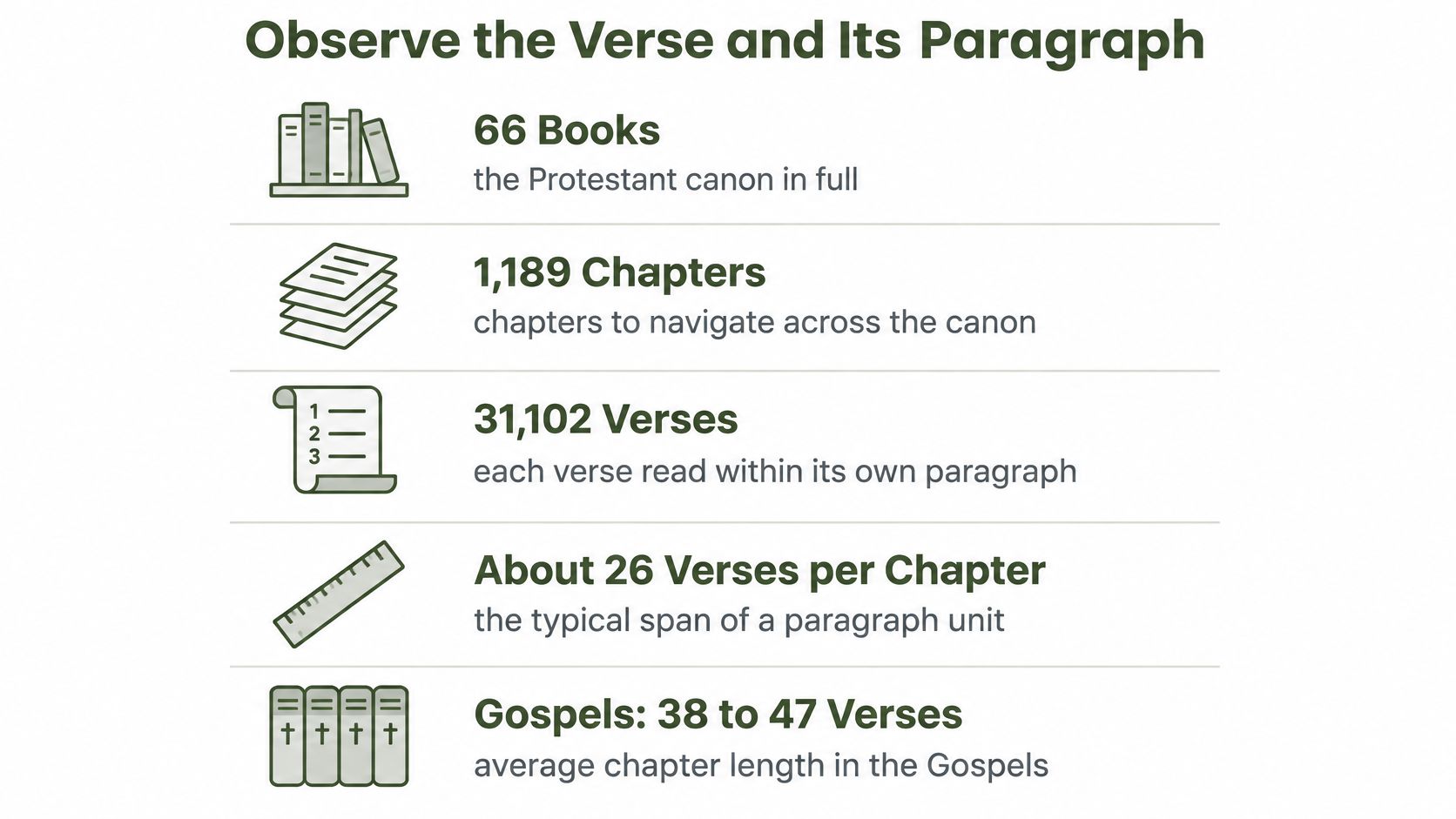
Standard Protestant Bibles contain 66 books, approximately 1,189 chapters, and about 31,102 verses, with some variation between editions, according to Bible Gateway's guide to Bible verses and chapters. That scale makes small reading units useful, but it doesn't make every numbered verse a self-contained idea.
Use the counts as navigation, not as a measure of how much meaning you should cover.
Notice before explaining
For Philippians 4:13, make these observations before deciding how the verse applies to you.
- Read aloud in different translations. Hear the sentence in your usual translation, then another. Mark differences without trying to resolve them yet.
- Read the whole paragraph. Start before your chosen verse and continue after it until the thought is complete. In Philippians, Paul's discussion of need and plenty is essential to understanding his statement about strength.
- Mark repeated or connected terms. Notice the broad expression all things alongside the circumstances Paul has just described. Don't replace his examples with your own goals.
- Identify grammatical signals. Look for commands, promises, contrasts, and words such as for, therefore, and so that. Also ask whether you're reading a command at all. Paul is describing his experience here.
- Name the speaker and audience. Write that Paul speaks to the Philippian church. Don't silently change his first-person statement into an unrestricted promise to every reader.
- Keep unresolved questions. Ask what all things includes, where the strength comes from, and how contentment relates to difficult circumstances.
Keep observations checkable
Your observation notes should describe something another reader can locate. Paul mentions hunger and abundance is an observation. This means I'll succeed at my exam is already an interpretation and application.
Don't worry if your notes look modest. Pronouns, contrasts, and connecting words are useful evidence.
Write what you can point to before writing what you think it implies.
Skipping the paragraph makes it easy to mistake a statement about endurance for a promise of achievement. Careful observation gives you a reason to pause before making that move.
How to Place the Verse in Its Context
Chapter and verse numbers help you find words, not define their original boundaries. The history of biblical chapter and verse divisions generally associates modern chapters with Stephen Langton's divisions around 1205 to 1227, and modern New Testament verse numbering with Robert Estienne's 1551 Greek New Testament.
Keep the surrounding text open as you investigate its setting.
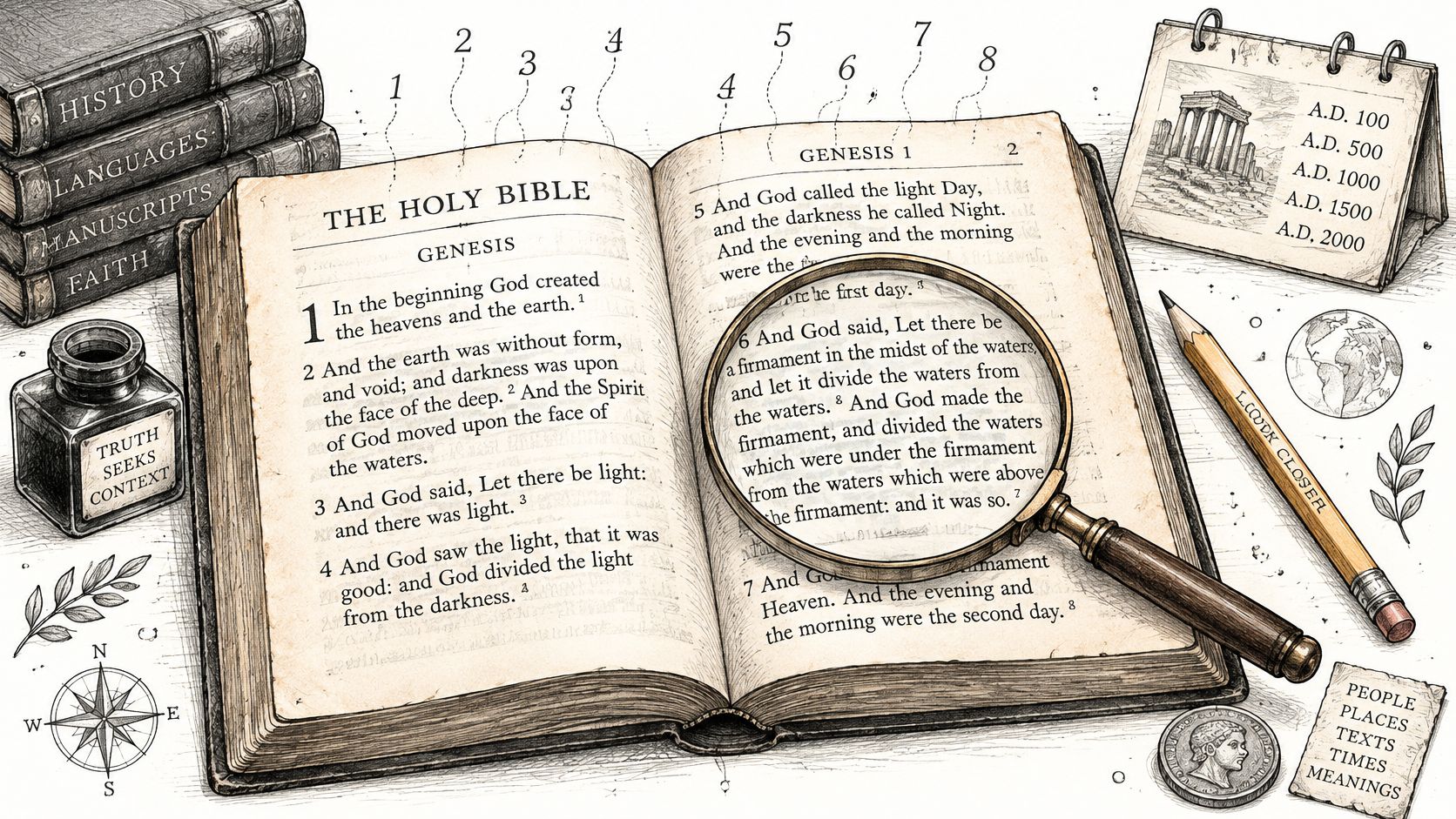
Move outward from the sentence
With Philippians 4:13, the immediate paragraph concerns Paul's learned contentment in need and abundance. His statement answers how he can face those changing circumstances.
The book-level setting is wider than a thank-you note, though gratitude for the Philippians' support matters here. Read the letter's opening and closing, then summarize its concerns, including partnership, joy, and faithfulness amid hardship.
The historical setting includes Paul's imprisonment and the church's support. Use a study Bible introduction to check those details, keeping historical information separate from guesses about his feelings.
The genre is a pastoral letter containing personal testimony. Read Paul's experience as part of his communication to a real congregation, rather than automatically treating every sentence as a direct command.
The wider biblical connection can include 2 Corinthians 12:9-10, where Paul discusses strength in weakness. That connection deserves examination, not automatic acceptance.
For a companion resource while you practice these context checks, use the video below.
Context turns a familiar phrase into a claim you can explain and defend.
How to Compare Wording and Follow Cross References
A wording difference is a question to investigate, not proof that a translation is wrong. Start by asking whether the difference changes the sentence's meaning or only expresses it differently.
For Philippians 4:13, compare these endings:
| Translation | Wording | What to examine |
|---|---|---|
| ESV | “who strengthens me” | Who supplies the strength? |
| KJV | “which strengtheneth me” | How does older English express the relationship? |
| NIV | “who gives me strength” | Does this communicate a different idea or clarify the same one? |
Read the whole sentence in each translation. In this example, the shared emphasis is strength received, not personal willpower generated independently.
Investigate only consequential differences
You don't need to know Greek to notice a translation question. You do need restraint before claiming that an English word misses the true meaning.
If the wording affects your interpretation, consult a study Bible note or a reputable original-language reference. Ask about the word's use in this sentence, not every possible definition listed in a dictionary. Don't select a definition merely because it supports your preferred message.
When choosing digital tools, a Bible study app for beginners should make comparison and surrounding context easy to reach. Extra information isn't useful if you can't connect it to the sentence you're studying.
Make cross references explain something
Use cross references to examine relationships between passages.
- Choose a plausible connection. Look for a shared subject, argument, quotation, or situation. A matching English word alone isn't enough.
- Read the linked passage in context. Ask what its author is discussing before borrowing its language.
- Describe the relationship. Write whether it confirms, qualifies, or complicates your interpretation.
Philippians 4:11-12 gives the immediate situation for verse 13. That's contextual evidence within the passage, not an independent parallel. By contrast, 2 Corinthians 12:9-10 offers a related discussion of strength amid weakness.
A useful note might say that the Corinthians passage supports dependence during hardship, rather than escape from every hardship. That explanation matters more than a long list of references.
Cross-reference test: If you can't explain why a passage belongs in your notes, don't use it as evidence yet.
A study Bible's reference column suggests connections. You still have to evaluate them.
How to Test Your Reading and Record It
Before settling on an interpretation, write competing readings. For Philippians 4:13, compare a guarantee of success in any chosen task with a statement about strength for facing the circumstances Paul describes.
Ask what each reading requires you to ignore. An interpretation that works only after removing the surrounding discussion is weaker than one that explains why the author placed the sentence there.
This approach follows the emphasis on observation, interpretation, evaluation, and correlation discussed in the Journal of Inductive Biblical Studies treatment of inductive method. The danger is atomistic reading, treating an isolated verse as though it carries its full explanation within itself.
Keep evidence separate from conclusions
Use a record that another reader can check.
| Field | What to write | Example for Philippians 4:13 |
|---|---|---|
| Observation | Repeated terms, commands, and contrasts from the text | The broad claim in verse 13 follows contentment, hunger, and plenty |
| Context evidence | Facts from the paragraph, book, setting, and genre | Paul writes from imprisonment and acknowledges the church's support |
| Interpretive claim | A sentence stating the meaning for the original audience | Christ supplies strength for contentment in any circumstance |
| Confidence level | High, medium, or low, with the reason | Medium while testing whether contentment fully expresses the ability Paul describes |
| Alternative reading | A rejected interpretation and why | Guaranteed success in every task, rejected because the preceding circumstances frame the claim |
| Concrete application | Leave blank until the claim is settled | Complete during the application phase |
Observation is not interpretation. Your notes should preserve that difference even when the interpretation seems obvious.
Likewise, a moving personal response belongs in your reflection or application field. It doesn't become evidence of what Paul intended just because it feels significant.
State uncertainty precisely
Use high confidence when the grammar, paragraph, and relevant connections strongly agree. Use medium confidence when a substantial question remains, and low confidence when you lack enough evidence to choose responsibly.
Confidence describes your assessment of the reading, not your commitment to Scripture. Name what remains uncertain rather than weakening every sentence with vague qualifications.
Study notes, including these, reflect interpretation. They don't replace reading the surrounding passage or seeking trusted spiritual guidance.
Your provisional claim might be: Paul claims Christ supplies strength for contentment in any circumstance, not success in every task. Record medium confidence if you're still testing the scope of that wording, alongside the rejected achievement-guarantee reading and its contextual problem.
How to Apply a Verse Without Forcing It
The trap is turning a numbered statement into a personal promise before asking whether the author intended one. Responsible application preserves both the meaning and the limits of the passage.
The EBC guide to studying the Bible emphasizes surrounding context, audience, and interpretive tools. Make the move from understanding to action explicit rather than assuming it will happen safely on its own.
Write meaning, principle, and response
Use these distinct outputs:
- Original meaning: Paul explains his ability to face need and abundance through the strength he receives.
- Transferable principle: Dependence on Christ isn't restricted to comfortable circumstances.
- Specific response: Identify a situation in which you're struggling with discontent, pray about it, and choose a faithful response that doesn't depend on getting your preferred outcome.
Write these separately on paper so you can check whether your response follows from the meaning.
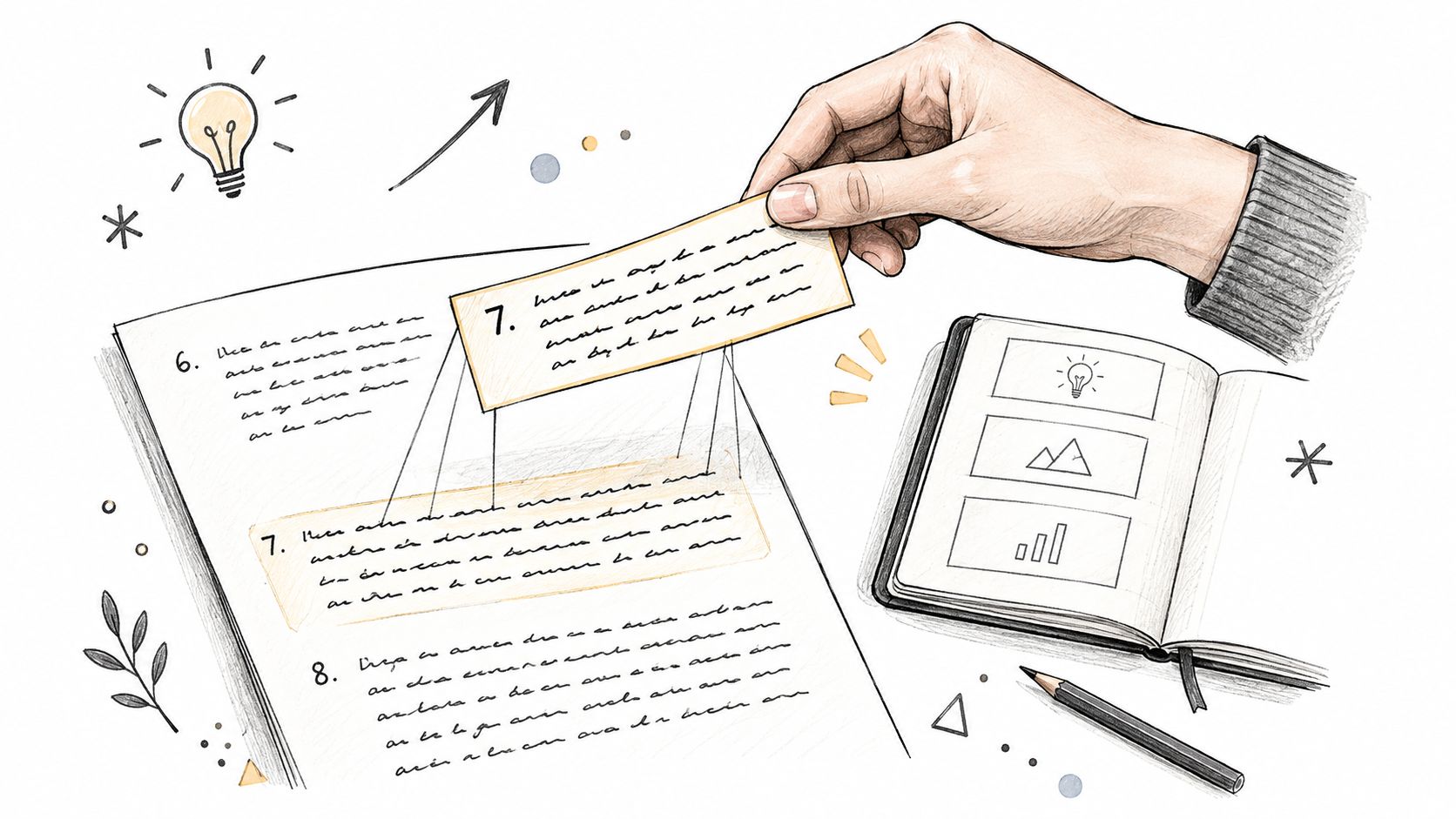
Genre affects how you make that transfer.
| Genre | Example passage | Typical misreading | Safer application pattern |
|---|---|---|---|
| Proverbs (wisdom) | Proverbs 22:6 | Treating a general pattern as a guaranteed promise | State the pattern and acknowledge exceptions |
| Psalms (poetry) | Psalm 23 | Reading emotional language as a literal rule | Name the emotion and the trust it models |
| Law | Leviticus 19:9-10 | Copying the rule word for word | Identify its principle, such as provision for the needy |
| Narrative | Judges 6-7 | Assuming the central character is always a model to copy | Ask what the story shows about God's action |
| Letters (epistles) | Romans 8:28 | Removing a statement from its argument | Restate the argument's point before applying it |
| Prophecy and apocalyptic | Daniel 7 | Forcing dates or events onto today | Identify the message to the original audience first |
Before writing your response, check its boundaries:
- First hearers: Would this response make sense in their situation?
- Principle rather than script: Are you preserving the teaching without mechanically copying the setting?
- Personal wording last: Have you established the claim before writing what you'll do?
Learning how to meditate on Scripture can help you dwell on an established meaning. For this passage, seek steady contentment in a hard situation, not assurance that every goal will succeed.
Start With One Verse This Week
Choose a short paragraph rather than a disconnected favorite. If you're unsure where to begin, use a guide to how to start reading the Bible to choose a manageable starting place.
Try this practice schedule, adjusting it when a question needs more attention:
- Observe: Read aloud and mark the paragraph.
- Place in context: Summarize the situation and the book's purpose.
- Compare: Investigate wording that affects meaning.
- Connect: Read relevant cross references in their settings.
- Test: Record your claim, confidence, and rejected alternative.
- Apply: Choose an action supported by the claim.
Recall, then verify
Close the text and explain the main claim from memory. Identify who acts, what happens, why it matters, and what response follows. Reopen the passage, correct your account, and try recalling it again after a delay.
A review in Educational Psychology Review reports that 57% of retrieval-practice experiments found medium or large benefits across varied learning settings. That's an educational finding, not a guarantee of Bible-study outcomes.
Don't confuse familiar wording with understanding, or copy commentary before making your own observations. A clear explanation you can verify is more useful than a page of borrowed notes.
Our Scroll With God app shows a single passage per screen, lets you swipe up to continue, and lets you read its full chapter without leaving the app. You can use it without creating an account.
Finish a passage this week using every phase, then choose the next paragraph.
Visit Scroll With God to begin with a focused passage and keep its full chapter close at hand. Use the passage as your starting point, then write your own observations before opening its study material.